 &
& 
Freya Beard is a free-lance journalist and teaching assistant from West London. She graduated from Cambridge University with a BA Honours degree in English Literature in 2023 and later attained a Gold Standard NCTJ qualification in multimedia journalism from News Associates in June 2025. Her areas of interest include: the environmental impacts of over-consumption, diaspora’s propagation of counter-culture in 20th Century Britain, and the ethical implications of AI.
Photography by Sanket Mishra
Amidst the raft of shattered commuters on the Overground the other day, I noticed a man thumbing through Instagram reels, his head perched gingerly on the glass screen divider between him and three other passengers as he watched a video compilation titled ‘top times dogs were ‘too pure’. A large dog throws himself in front of a falling mirror in the first clip, protecting a sleeping baby that would certainly have been crushed had his canine companion not instinctively intervened. Just some feel-good AI slop to warm the soul on a frosty evening commute home.
A few emotions proceeded. First came the rage that AI had pillaged the last sacrosanct pillar of internet culture – cute animal content. Then the uneasy premonition that the era of the ‘dead internet’ is upon us. Off the back of emerging sentiment on online forums in the late 2010s that the internet had become startlingly impersonal and repetitive, the ‘dead internet’ theory hypothesised that the digital sphere had been almost entirely taken over by AI-generated content. It’s unclear when this theory entered the mainstream but the nascence of ChatGPT in 2022 seems to be a reasonable estimate. It may have seemed sensationalist when it first appeared, but it now seemed very much prophetic. As I looked at that man’s screen I envisaged the parabled internet user, searching for the vestiges of human imprint in an amorphous soup of AI-generated content.
Research study conducted by the National Innovation Centre of Ageing on digital and physical spaces recognises the Internet as a space to discover activities, maintain contact with friends and loved ones and support those with mobility issues.
Yearning followed, with all the fuzzy entrappings of misguided nostalgia. I hankered after the internet of bygone times. This place of connection, meaningful cultural education and exchange, a space that propagated it’s own extensive lexicon and a sense of camaraderie between those who ‘got the reference’. It is easy to dismiss the online sphere as a mere bastardisation of real-life interaction. But a research study conducted by the National Innovation Centre of Ageing on digital and physical spaces recognises the Internet as a space to discover activities, maintain contact with friends and loved ones and support those with mobility issues. Among participants, hobbies groups, activity-based spaces and interest communities were repeatedly cited as the strongest enablers of connection in not just physical environments but digital ones too. That is to say, meaningful connections can be made in the online sphere.
Yet, this moment on the train posed a question, that perhaps AI’s onslaught on the online sphere is the Deux Ex Machina needed to free us from the tentacles of our algorithm and push us back into real life.
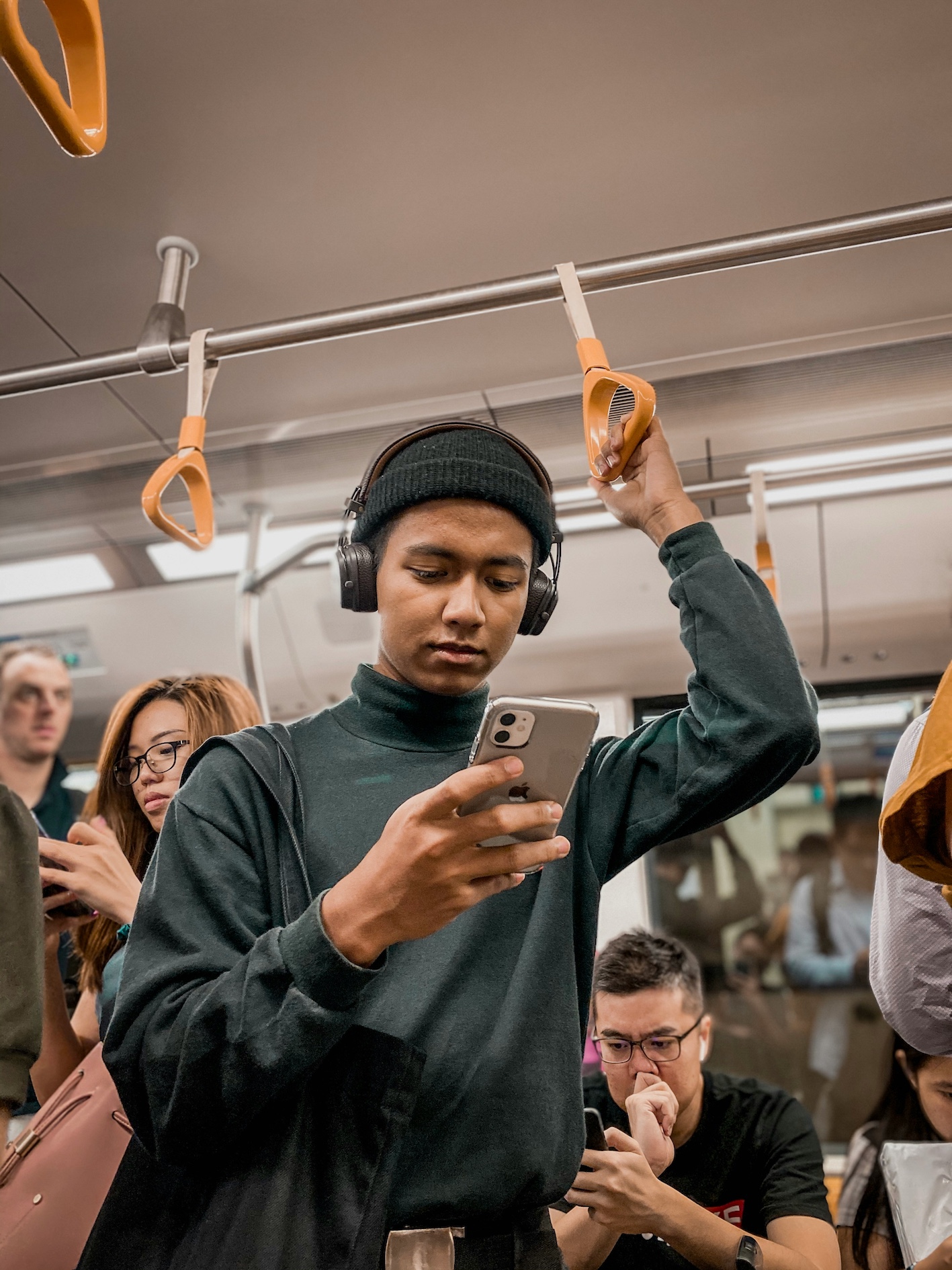
Photography by Rasheed Kemy
Today, Western society is plagued by the loss of the ‘third space’, this place separate from the home and workplace for people to socialise and engage with hobbies. Libraries, cafes, parks, bars are some such examples. It’s this loss and the ensuing deterioration of a casual sense of community that given rise to a more individualist culture which often manifests in the prioritising of individual needs and desires over a need to ‘show up’. Those guilty are largely victims of circumstance. This social breakdown is commonly recognised as a symptom of the late-stage Capitalist emphasis on rampant productivity that has clobbered work-life balance over the head. People are so exhausted that ‘self-care’ by way of staying in and rain-checking on social plans has understandably become more enticing, or rather a necessary measure to reset for the coming work week.
Third spaces provide opportunities to cultivate friendships and by virtue of this, they crucially allow us to get to know and understand ourselves.
But then where does this need for connection go? To grossly misappropriate the first law of thermodynamics: energy cannot be created or destroyed, it can only be changed from one form to another. Third spaces provide opportunities to cultivate friendships and by virtue of this, they crucially allow us to get to know and understand ourselves. Getting to know ourselves by way of simply existing in the company of others. As our access to such physical places has arguably diminished, the internet has become somewhat of a surrogate third space. Platforms like Tiktok, Instagram and X, brimming with ‘big sister’ style dating and career advice, short-form content explaining such psychological phenomena as ‘limerence’ and ‘projection’ and what it means to have an anxious avoidant attachment style, reflect an online generation determined to understand themselves better.
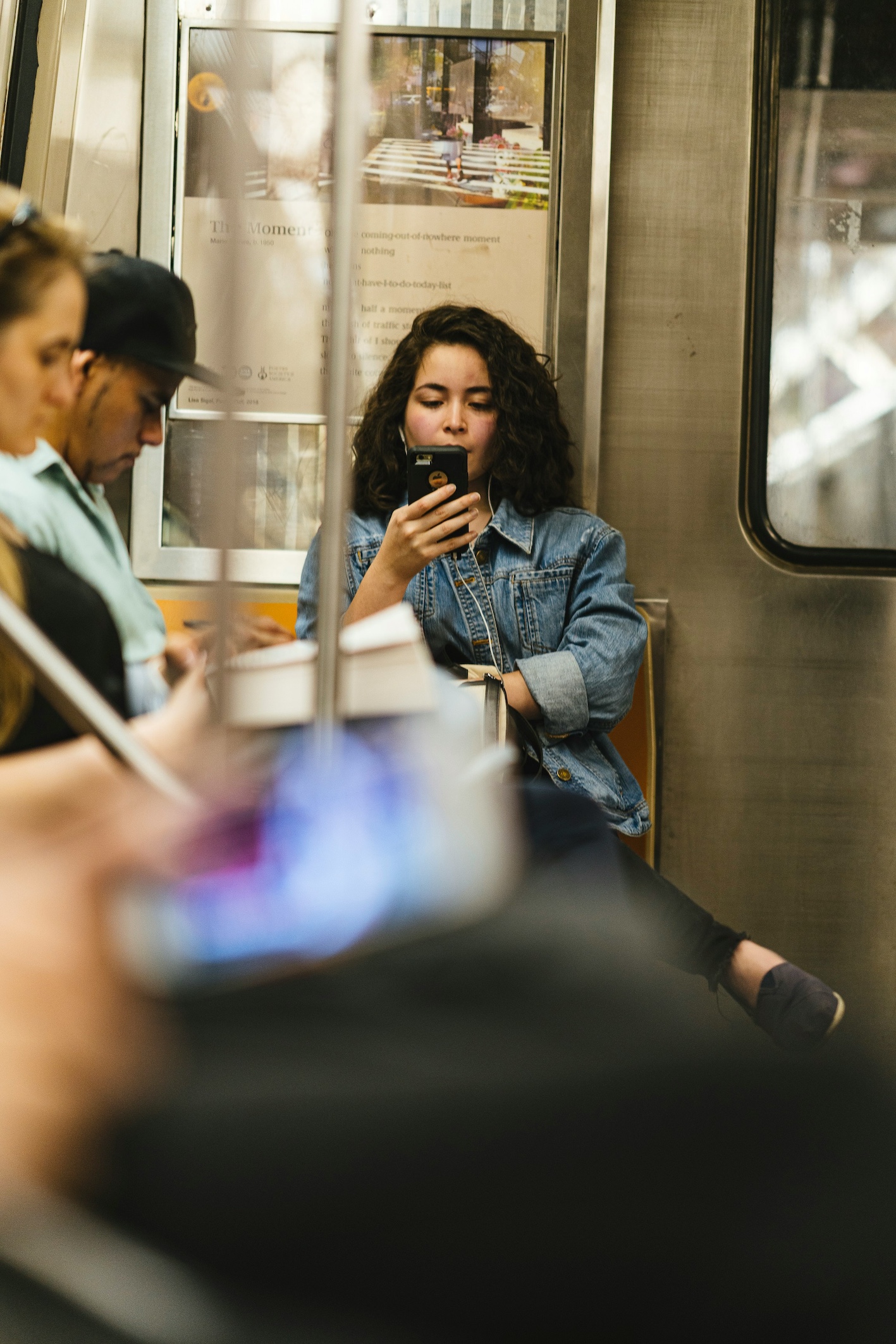
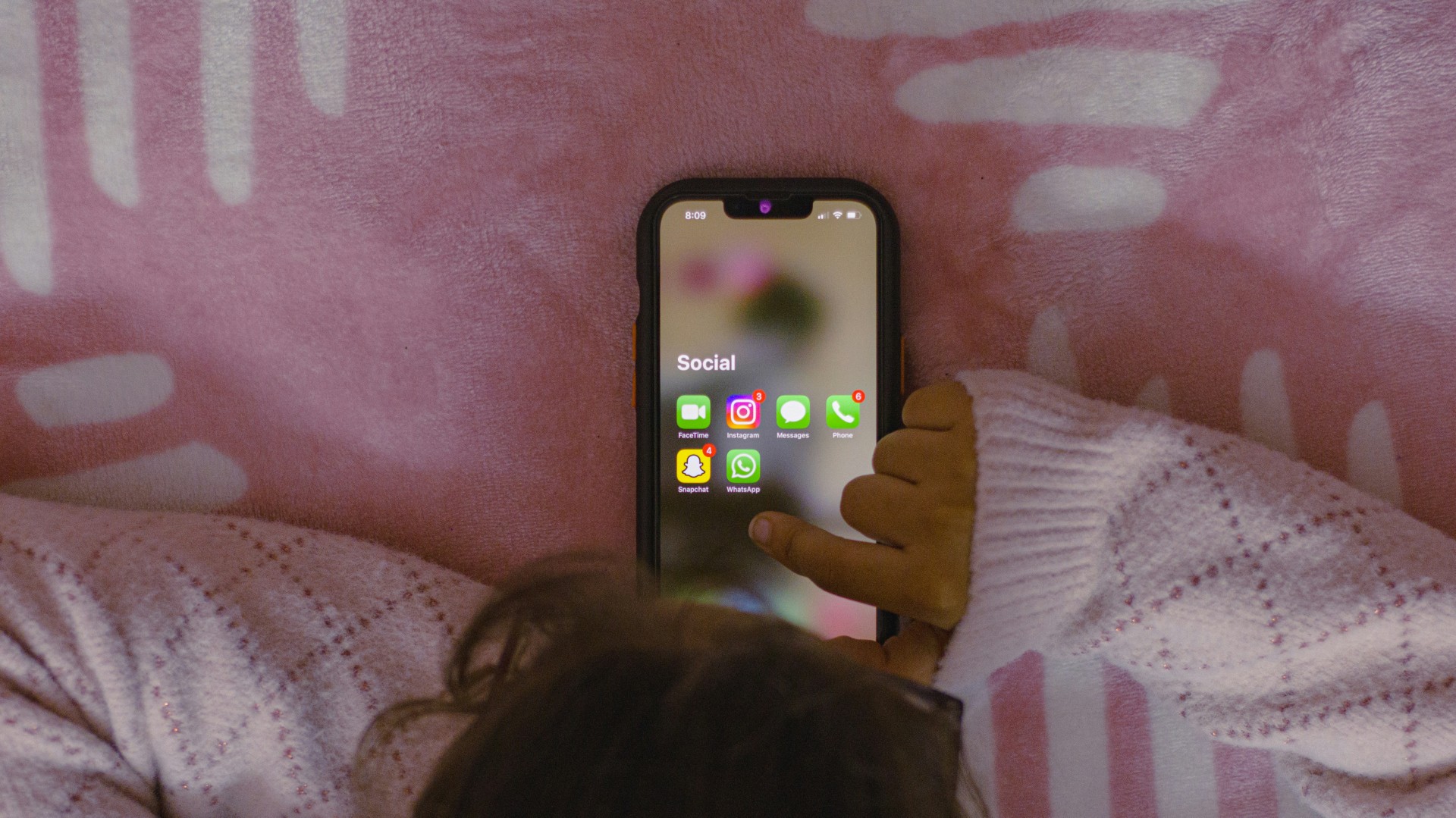
Photography by Nelson Ndongala
But, the deluge of content online that can be loosely categorised as ‘self-help’ leaning has largely obfuscated self-awareness for its viewership. ‘Friendship’ advice often takes a ruthless hardline approach – take the flagship of all internet aphorisms ‘if they wanted to, they would’. The phrase, commonly deployed in response to both romantic and platonic grievances, is an enduring (albeit toe-curlingly so) mantra of the Gen-Z zeitgeist. But while providing a resolute framework for dealing with supposedly inattentive partners or friends, its equal power to misguide people into defecting from community is glaring.
While ‘parasocial’ and ‘rage-bait’ were selected by Cambridge Dictionary and the Oxford English Dictionary respectively as their ‘word of 2025’, the word ‘performative’ has dominated in online discourse. From ‘performative male’ to ‘performative activism’, ‘performative intellectualism’ ‘performative chill’ etc, its presence pervades cultural commentary, capturing a particularly acute anxiety around identity and its innate slipperiness. The question ‘who am I?’ an interrogation so loaded that it topples into the bathetic, fundamentally cannot be answered online. The internet knows this – its inexhaustible commentary on the performativity of others deflect from the question – we scrutinise and deride the inauthenticity of others, to displace our anxiety that we ours are not the real deal. We self-cannibalise by seeking a solution in the very medium motorised by inauthenticity.
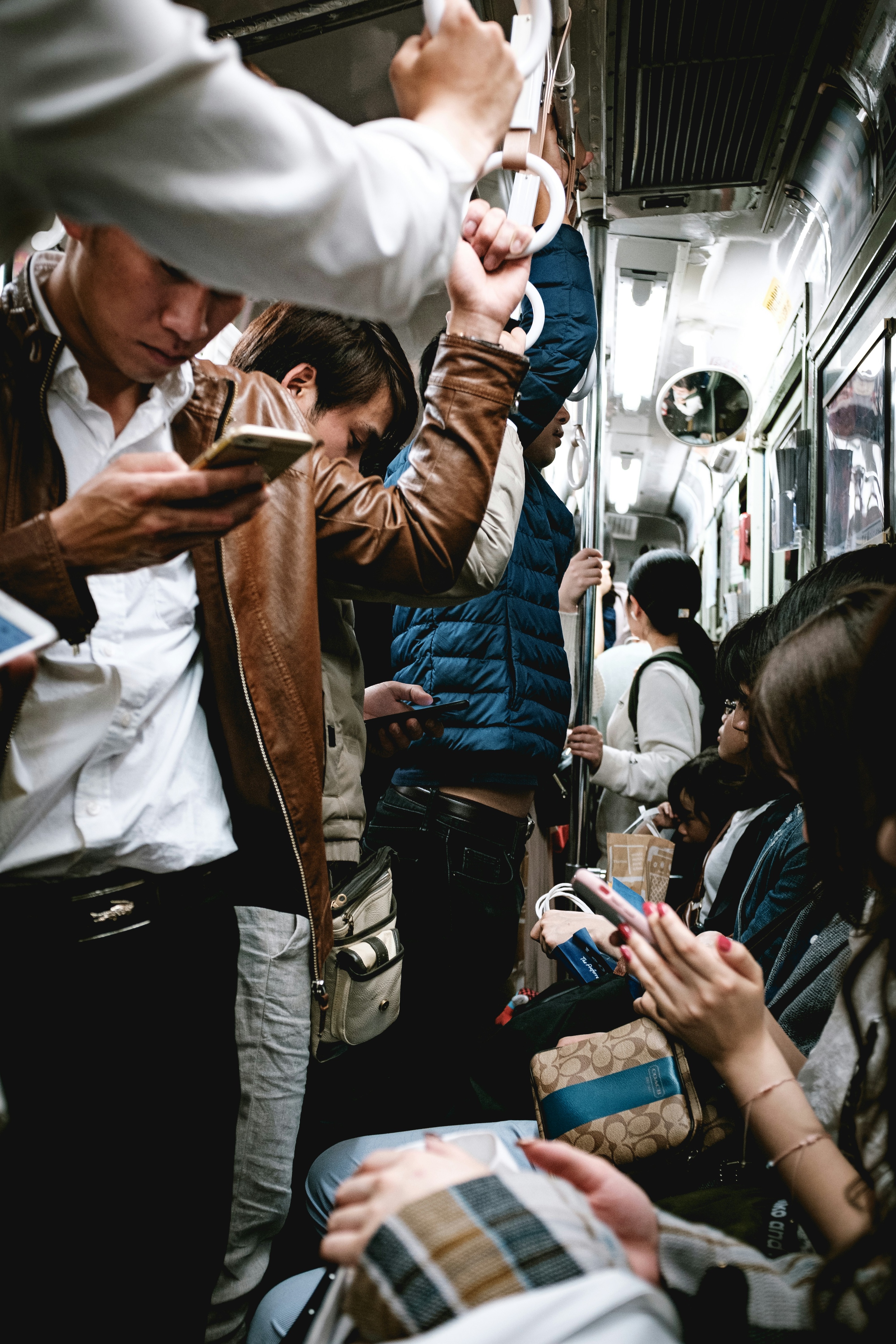
Photography by Christian Chen
Gone are the optimistic days of the internet that could have taken legitimate claim to being a third space, as an entity cultivating community. To live online is to live inside your own head now. We know that scrolling algorithms cannot replicate time spent trying hobbies and existing with other people for the pure joy of it.
All I know is that it was enough to push me off my phone and out of my head, for that moment.
Saving pithy aphorisms that appear on Instagram reels are no substitute for the realisations that happen upon you with lived experience. This is not to mention, the health benefits of socialising, include a reduction in inflammation, a lower risk of serious health problems and a prevention of early death, according to the World Health Organisation.
Looking over that man’s shoulder on the train, I could feel my nervous system being rewired; tentatively, begrudgingly. I didn’t compulsively scroll for the rest of my train ride. Perhaps, the cuteness compilation that landed on that man’s phone is an indicator that the internet is being hollowed out by AI – perhaps we are finally being forced offline – but then again, maybe not. All I know is that it was enough to push me off my phone and out of my head, for that moment.