Photography by Curated Lifestyle
A growing global challenge
Globally, around 56.8 million people are estimated to need palliative care every year, yet only a small minority receive it. According to the World Health Organization, around 25.7 million of those people are in the final year of life, and the need for support is expected to rise dramatically over the coming decades as populations age and more people live with multiple long-term health conditions.
Some estimates suggest that only around one in ten people who need palliative care currently receive it. The gap is particularly severe in low- and middle-income countries, where the vast majority of people needing palliative support live. But perhaps the challenge is not only medical. Maybe it is cultural too.
Listening to her speak, it becomes hard not to wonder whether reclaiming some of that knowledge could transform not only how we die, but how we age and live too.
Relearning our “death know-how”
It is hard not to wonder whether, over time, many of us, especially in the West, have become less familiar with death as part of everyday life and less confident in how we care for one another through it. That is the space Hermione Elliott has spent decades exploring through her organisation Living Well Dying Well. A former nurse, midwife, palliative care practitioner and founder of one of the UK’s first End of Life Doula training programmes, Hermione believes something important has slowly disappeared from modern society; what she calls our “death know-how.”
Listening to her speak, it becomes hard not to wonder whether reclaiming some of that knowledge could transform not only how we die, but how we age and live too.
When death disappeared from everyday life
For most of human history, the idea of death sat much closer to our everyday life. People died at home, families cared for older and vulnerable relatives. Bodies were washed by loved ones and children witnessed grief and mourning as part of community life. Now, many people reach adulthood barely encountering death at all, until it arrives in the context of hospital corridors, medical interventions, paperwork, and panic. “We’ve handed over responsibility more and more,” Hermione says.
Modern medicine has brought extraordinary advances, of course. People are surviving illnesses that would once have killed them, and palliative care teams do remarkable work controlling pain and symptoms. Some of the innovative work now taking place, including projects exploring how families can be better supported to care for loved ones at home, is helping to reshape how end-of-life care is delivered . (You can explore some of the pioneering work taking place at UCL in this earlier This Curious Life article.)
Hermione herself speaks with huge respect for the healthcare professionals she has and still does work alongside. But she also believes something deeply human can get lost when death becomes entirely medicalised. “There’s a distinction between pain and suffering,” she explains. “Palliative care is brilliant at pain management and symptom control. But often there’s emotional, psychological and spiritual suffering that doesn’t get addressed.”
That idea feels especially important in a world where more of us will live longer lives. Because longevity is not only about adding years. It is about how we navigate the emotional and existential realities that come with being human.
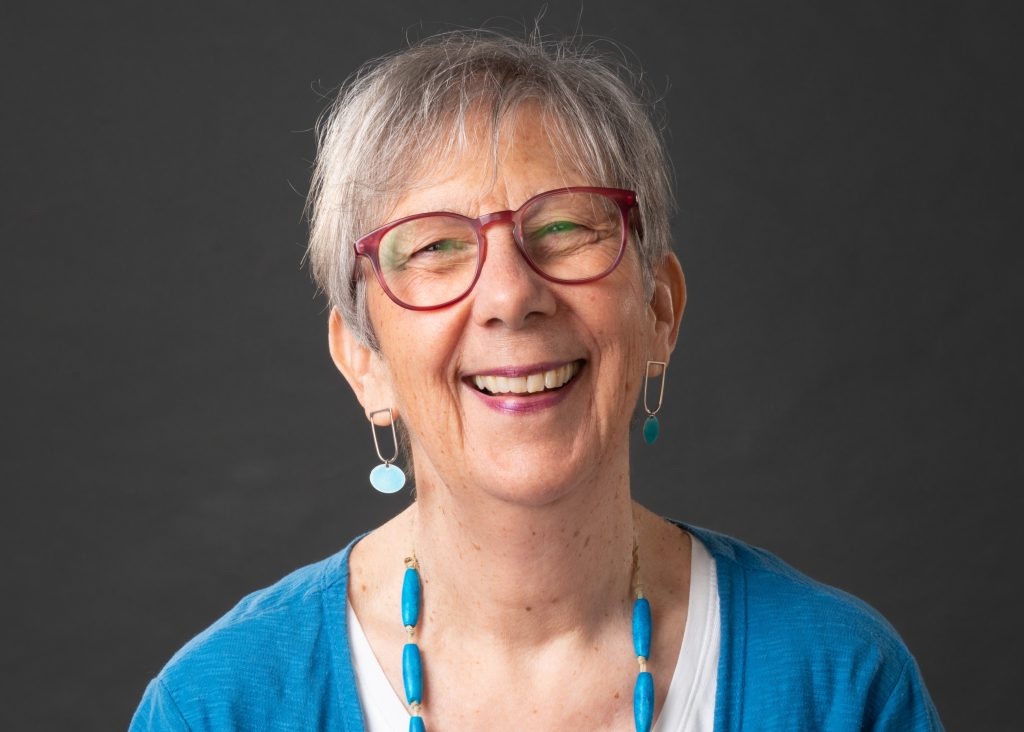
Hermione Elliott, founder of Living Well Dying Well
Three deaths that changed everything
Hermione traces the origins of Living Well Dying Well back to three very different deaths within her own family. Her father died suddenly and was aggressively resuscitated despite his age and frailty. Her aunt experienced what Hermione describes as a “medical nightmare” of endless interventions and tubes. But her mother’s death was different.
After breaking her hip at 90, followed by weeks of treatment and increasing decline, her mother calmly told her: “Hermione, I’d like to pass on now.” Supported by a compassionate GP and care staff, she remained at home, surrounded by familiarity and family, dying peacefully several days later. “It was wonderful,” Hermione recalls. “It felt like a sacred duty had been fulfilled.”
Those experiences left her with a profound question, why are we so unprepared for something so universal? Within a few years, she began running public workshops exploring death, dying, and what makes a “good death.” To her surprise, people came in large numbers. Not because they were morbid, but because they were hungry for spaces where these conversations could finally happen.
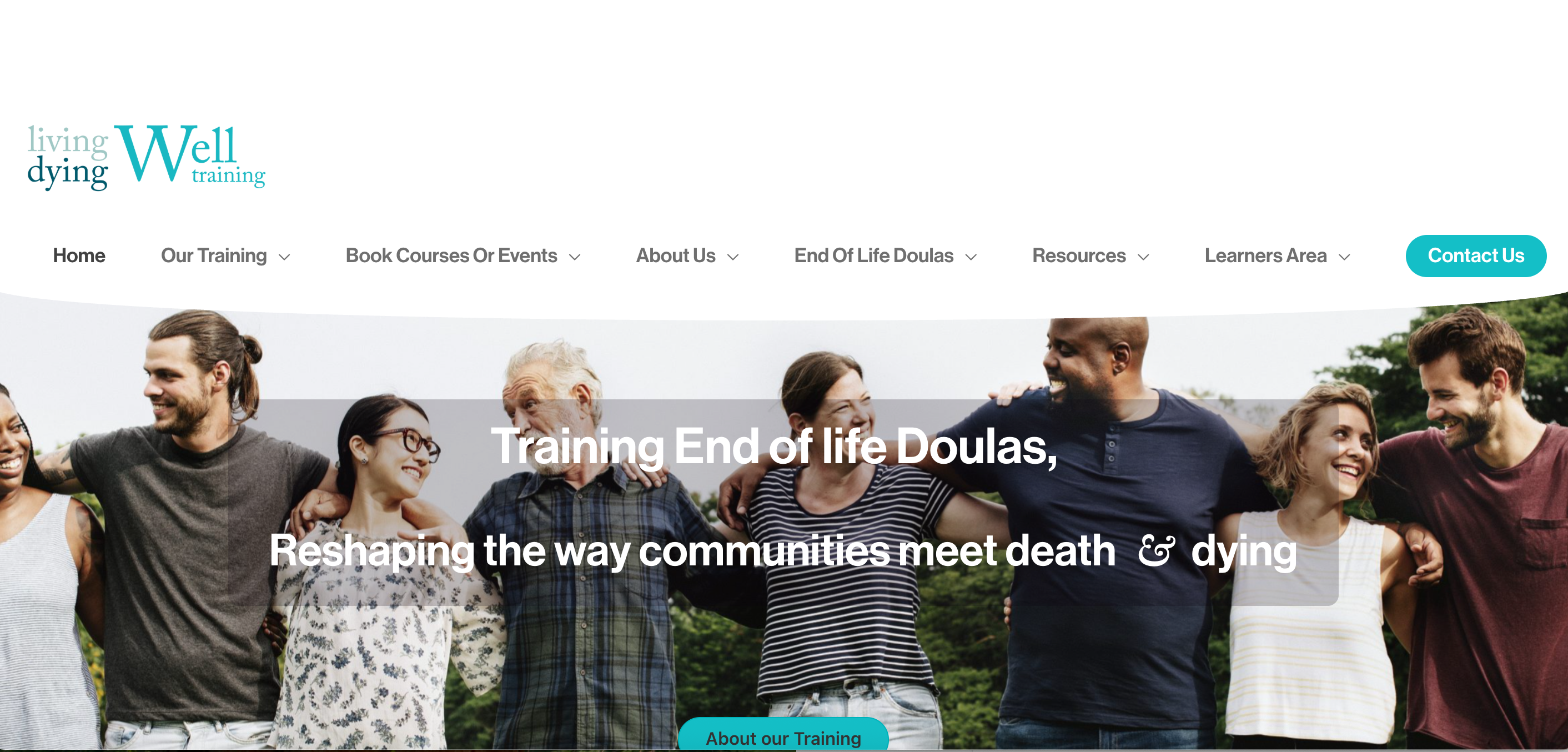
Living Well, Dying Well website
“People want to talk about it”
One of the most striking things Hermione says is that society may actually be far more ready for these conversations than we assume. “People want to engage,” she explains. “They’ve had experiences and there’s been no place for them.”
Again and again, she sees people visibly relax when given permission to talk openly about grief, fear, regret, spirituality, care, and mortality. Students attending doula training often describe it as “coming home.”
Perhaps that is because death touches every family, yet modern life offers surprisingly few places to process it collectively. And perhaps that silence contributes not only to fear of death, but fear of ageing itself.
When ageing is framed only as decline, loss, and something to resist, it becomes harder to see later life as a meaningful and natural stage of human existence.
What if ageing isn’t the enemy?
Because when ageing is framed only as decline, loss, and something to resist, it becomes harder to see later life as a meaningful and natural stage of human existence. We often talk about “anti-ageing” as though ageing itself were failure. Yet ageing and death are not interruptions to life. They are part of life itself. The cycle has always existed: birth, growth, ageing, dying.
Somewhere along the way, many of us began treating our final days as something unnatural rather than something deeply human. Hermione offers up a radically different perspective. What if ageing and dying are not failures to avoid, but transitions to understand more deeply?
Is this an innovation hiding in plain sight?
What makes her work especially interesting within the longevity conversation is that her vision is not centred on high-tech innovation. It is centred on people.
“My vision was that there would be a death doula in every community,” she says. Not necessarily as professionals, but as informed citizens. Ordinary people with the confidence and skills to support others through dying, grief, planning, and care.
In many ways, it is a form of social infrastructure. An antidote to isolation and to fear. And perhaps even an antidote to the broader cultural denial of death itself. At a time when healthcare systems around the world are under enormous strain, this idea feels surprisingly powerful. Not because community support replaces medicine, but because it complements it. It reconnects death with humanity, relationships, meaning, and care.
Learning how to let go
Perhaps the most unexpected part of our conversation was how hopeful it felt. Hermione does not speak about death with darkness or despair. Quite the opposite. She believes that when we become more willing to face mortality, life itself often becomes richer, clearer, and more intentional. “I think if we faced death a little more consciously, we would live much better,” she says.
It is a striking idea in a culture still deeply focused on anti-ageing, particularly in the West. Yet perhaps reconnecting with death is not about giving up on life at all, but about living more consciously, about becoming more appreciative, more connected, and more aware of what truly matters.
Photography by Hasan Almasi
A different kind of innovation
When we talk about innovation in ageing and longevity, we often focus on technology, medicine, and extending life. But perhaps some of the most important innovations for longer lives are not only scientific, but they are human too.
Hermione Elliott’s work points towards a different kind of future. One where communities feel more confident talking about death, supporting one another through grief, and caring for people not only medically, but emotionally and spiritually too.
In a world where more of us will live longer lives, perhaps we need more than longevity science alone. Perhaps we also need to rebuild the human skills that help us navigate the whole cycle of life with dignity, compassion, and connection.
Because the future of healthy ageing may depend not only on how long we live, but on how well we care for one another right until the end.
—
You can find out more about Living Well, Dying Well, here.

 &
&