Photography by Getty Images on Unsplash
Longevity invites reinvention. As we live longer, we must rethink the spaces that support healthy ageing. This story begins in one leisure centre in the UK, but its implications are global. What if the future of fitness is not about optimising the few, but about widening access to health itself?
Only around 2–3% of the world’s population holds a gym membership. Even in high-income countries, most people do not belong.
A Wellness Revolution With a Gap.
We are living through an extraordinary moment in health and fitness. Our watches track our sleep cycles and recovery scores. Apps calculate our biological age. Gym floors are filled with intelligent machines and immersive experiences once reserved for elite athletes. Globally, the fitness and recreational sports centres market is worth more than $150 billion today and forecasts suggest it could surpass $235 billion by 2034.
It is impressive. It signals optimism. It suggests we are taking our longer lives seriously. And yet participation tells a different story. Only around 2–3% of the world’s population holds a gym membership. Even in high-income countries, most people do not belong. For all our innovation, the majority remain outside the system. That is the 98% problem.
In a society where we are living longer than any generation before us, this is not a marginal issue. Longevity is not simply about adding years. It is about maintaining independence, resilience and connection throughout those years. If the spaces designed to support health feel inaccessible, then the promise of longer life becomes unevenly distributed. So what is keeping so many people away?
Photography by Getty Images on Unsplash
When Fitness Feels Like It’s “For Other People.”
For some of us, the gym represents energy and progress. It is a place where effort translates visibly into improvement. But for many others, stepping into a gym can feel like entering an environment designed for someone else, someone fitter, stronger, more confident.
We may not say it outright, but many people assume gyms are for the already fit. That assumption affects behaviour. If a space feels uncomfortable at 35, it can feel almost impossible after illness, surgery or years of inactivity. And in later life, when our strength and balance matter most, that psychological barrier can become a practical one. The irony is striking. At the very moment we most need accessible environments that support lifelong movement, many people feel least able to enter them.
“Our aim is to enable more people to move more often, particularly those who find traditional environments difficult. We want this to feel more like a prehab or rehab clinic than a leisure centre,” Duncan Kerr, Wave Active.
A Different Kind of Space
At Downs Leisure Centre in the South East of the UK, Wave Active is testing a different approach. Lilian’s Room was not designed as a high-performance training zone, but for people who might otherwise feel excluded from structured fitness environments, particularly those living with long-term conditions or rebuilding strength after illness.
The suite was made possible by a bequest from a local resident, Lilian Davis, who had attended Wave Active’s outreach sessions in her care home. Her legacy now funds a space dedicated to active ageing and rehabilitation. On one level, this is a local story. Viewed more broadly, it reflects something larger.
Around the world, healthcare systems are shifting care out of hospitals and into communities, moving from episodic treatment to long-term support for people living with chronic conditions. They are searching for scalable models that combine prevention, rehabilitation and social connection.
In that context, Lilian’s Room feels less like a one-off and more like a signal. It repurposes community infrastructure, integrates rehabilitation technologies such as Innerva and STROLLL, and works alongside primary care to position leisure space as preventative health infrastructure. Replicated at scale, it is not simply a room, but a model.
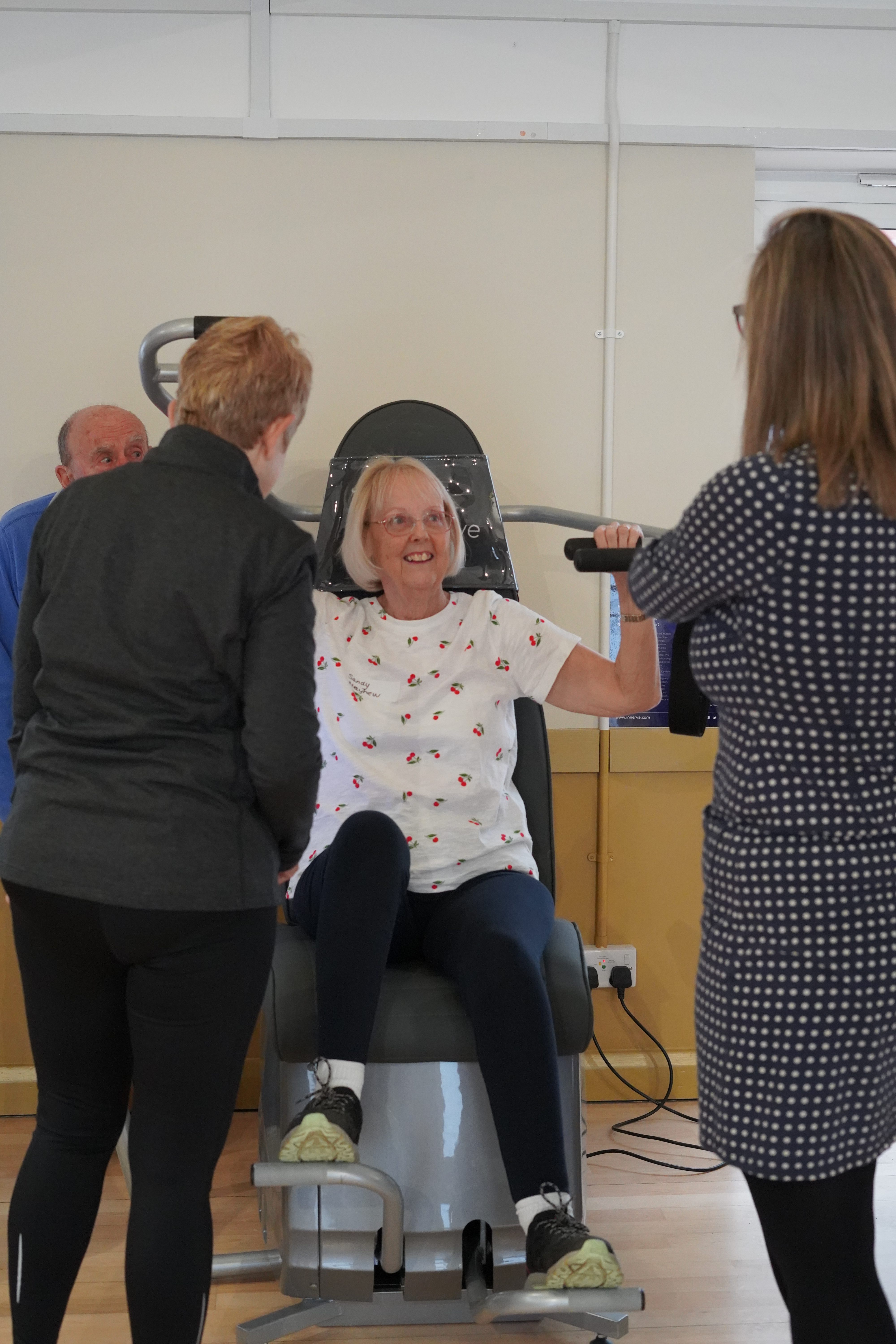
Co-designed with Innerva, the space uses power-assisted equipment to support controlled movement, helping rebuild strength and confidence after surgery, stroke or prolonged inactivity. STROLLL’s augmented reality system brings clinically proven mobility and cognitive training into a community setting, supported by specialist staff. The result feels closer to prehabilitation and rehabilitation than to a conventional gym.
Wave Active’s CEO, Duncan Kerr, is clear about the ambition: “Our aim is to enable more people to move more often, particularly those who find traditional environments difficult. We want this to feel more like a prehab or rehab clinic than a leisure centre.”
This is not about performance. It is about participation.
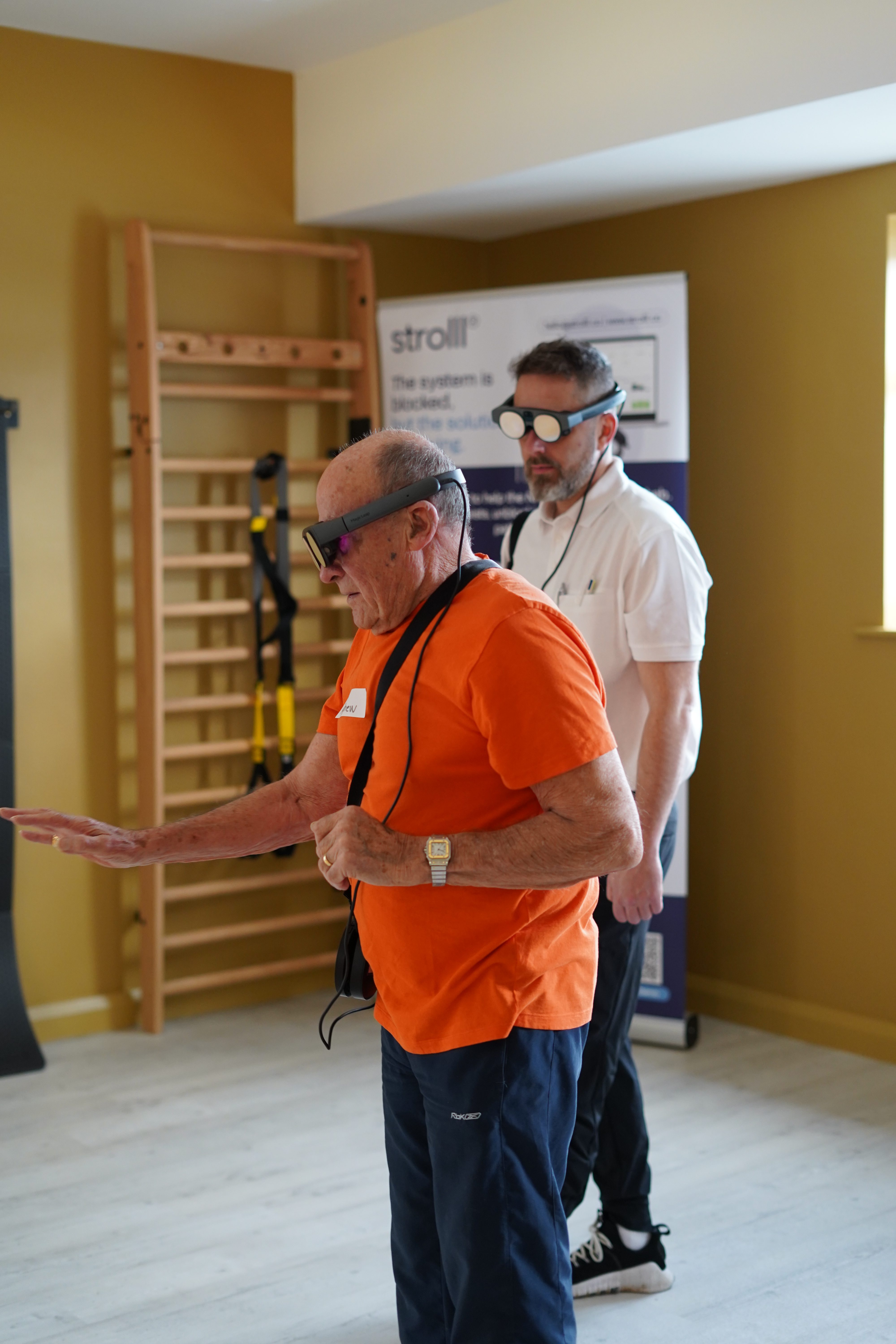
Wave Active member trying out the Strolll.
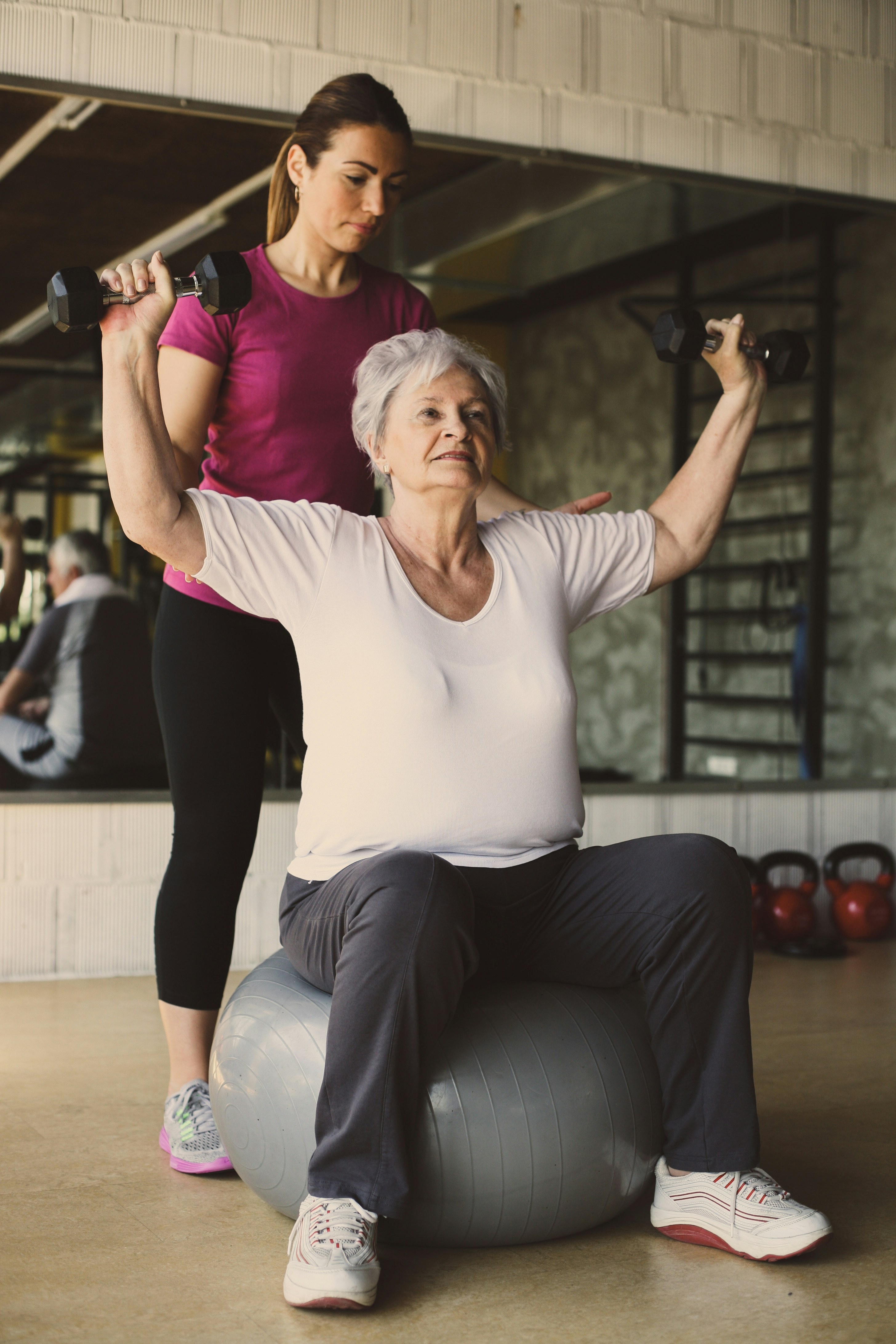
Wave Active member using the Innerva machines.
From Optimisation to Independence
One Wave member, described her experience of Lilian’s Room in language rarely associated with gyms. She spoke of feeling more confident than she does in a larger facility. She described the atmosphere as relaxing and uplifting. “I feel like I’m glowing,” she said. “This is going to change my life.” In a sector driven by metrics and measurable gains, the word ‘glowing’ feels revolutionary.
Much of modern wellness culture centres on optimisation. We track speed, endurance and strength. We compare biological age to chronological age. But longevity is also about the less flashy markers of capability. It is about rising from a chair without fear, steadying oneself after a stumble, rebuilding strength after illness and remaining socially connected. It is about reducing avoidable hospital admissions and preserving autonomy for as long as possible.
The idea may sound ambitious. But the case for early, community-based intervention is already well established. A public health modelling exercise in Calderdale in the UK suggested that if everyone aged 65 and over who was at risk of falling were referred to physiotherapy-led strength and balance programmes, around 160,000 falls could be prevented annually, saving the NHS an estimated £250 million each year. The logic is simple: intervene early, support strength and balance systematically, and prevent decline before it accelerates. When movement becomes preventative care, the implications extend far beyond the gym floor.
In a global fitness industry worth billions, perhaps the most meaningful innovation is not faster, smarter or more intense. It is a space where someone walks in uncertain and leaves steadier, physically and emotionally.
Where Health and Leisure Meet
Kerr believes leisure centres can become integral partners in primary healthcare. Wave Active is already working alongside hospital stroke teams to reduce deconditioning during hospital stays and to support recovery once patients return home. In this model, the boundary between clinic and community softens. Leisure becomes an extension of healthcare rather than an optional extra.
In a longevity society, this integration matters deeply. A 33-year-old today will be 60 in 2053. The environments we create now — inclusive, supportive and integrated with health services — will shape our own later years. The 98% problem is not about a disengaged minority. It is about all of us. It is about whether the systems we build for longer lives are designed for performance alone, or for participation at every stage of life.
Lilian was described as warm, calm and appreciative of everyday pleasures. She valued the sessions she attended. Her legacy ensures others can experience movement not as pressure, but as possibility. In a global fitness industry worth billions, perhaps the most meaningful innovation is not faster, smarter or more intense. It is a space where someone walks in uncertain and leaves steadier, physically and emotionally.
If longevity is an opportunity rather than a burden, then the future of fitness will not be defined by how fit the fittest become. It will be defined by how many of us feel invited to take part.

 &
&