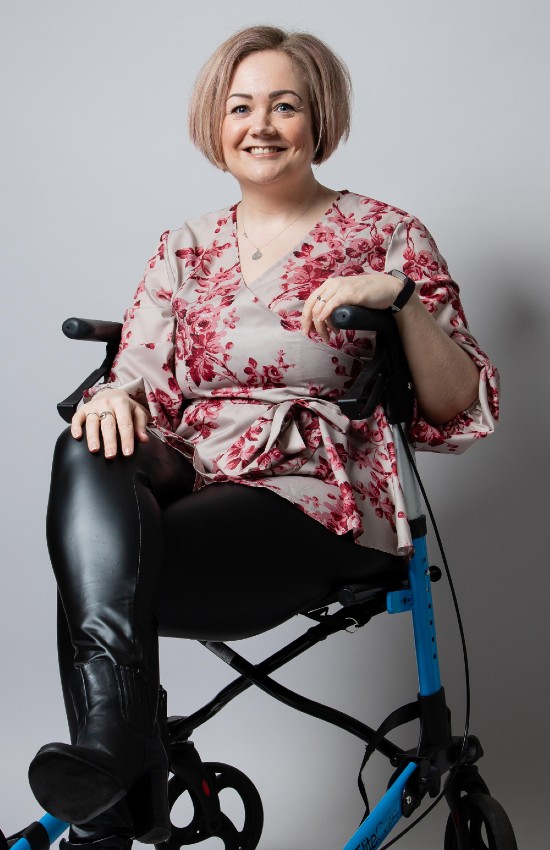
At fourteen, Victoria developed chronic fatigue syndrome. Decades later, a growing list of health conditions would force her to leave the career she loved, rely on carers and question her sense of identity. Today, researchers seek out her expertise. Not despite her experiences but because of them.
A Life Beyond the Diagnosis
Victoria was just fourteen when she developed chronic fatigue syndrome. At the time, understanding of the condition was limited. She missed large periods of school, gave up dancing and spent years moving between appointments as doctors tried to understand what was happening. Although she eventually found ways to manage her symptoms, fatigue remained a constant in her life.
She went to university, started to build a successful career and learned how to adapt to survive. But in her late twenties, new challenges emerged, including pain which spread through her joints. Doctors initially suspected rheumatoid arthritis before discovering she had a rare autoimmune condition affecting the liver. Over time, more diagnoses followed, alongside increasing pain and fatigue.
By 2016, her health had deteriorated significantly and strong medications, including opioids, had become part of daily life. She needed carers, sometimes used a wheelchair and was forced to leave the career she had worked hard to build.
The physical challenges were difficult enough but what surprised her was the emotional impact. “I’d lost my identity. I was used to managing a team of 50 staff. Then suddenly you’re on benefits and you’re a waste of space and what are you going to do with your life?”
For years, work had provided structure, purpose and a sense of self for Victoria. Without it, she found herself confronting questions that many people living with long-term conditions know all too well. Who am I now? What do I still have to offer? Where do I belong?
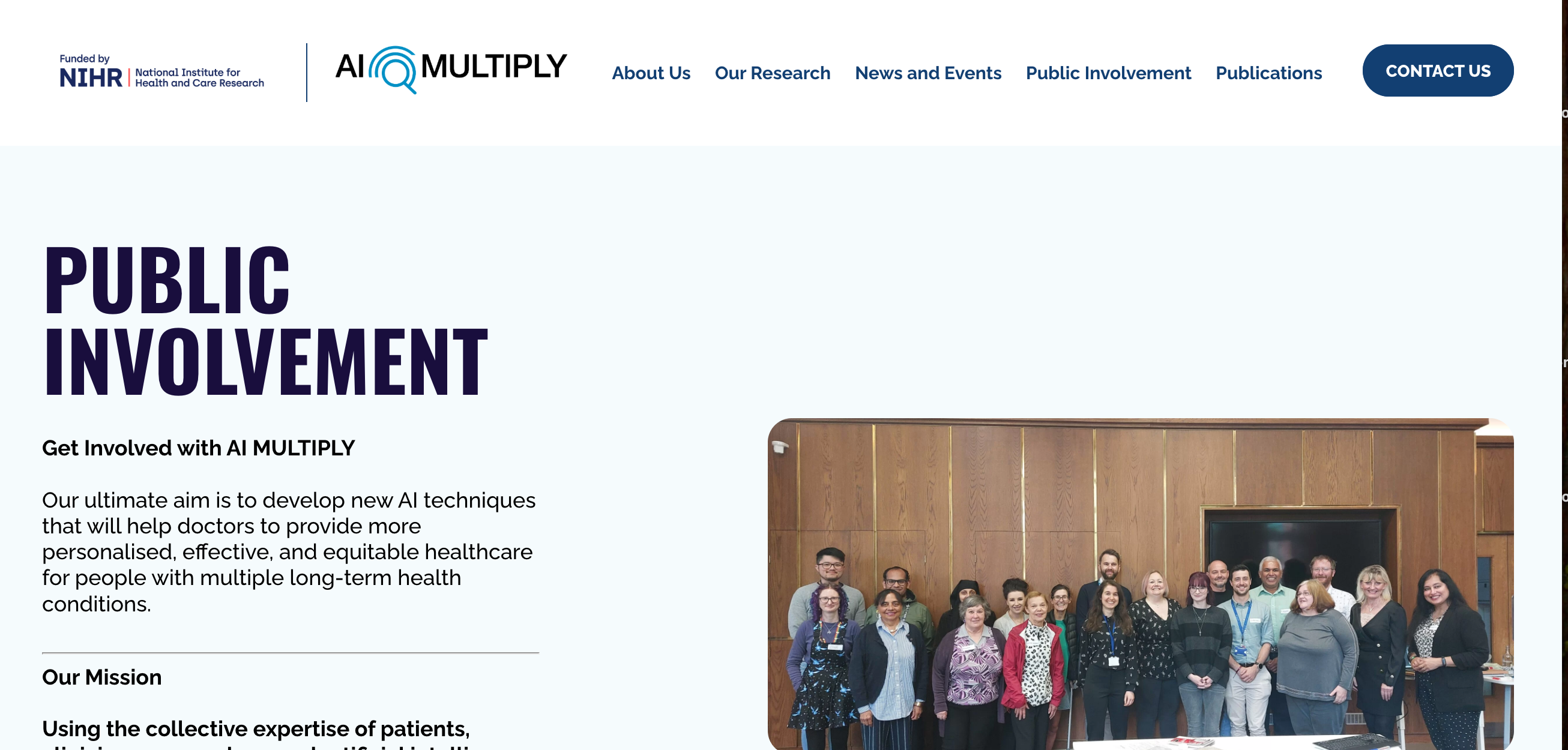
Victoria (centre) leads public engagement for the AI Multiply project, helping ensure citizen perspectives and lived experience are embedded throughout the work.
Finding Purpose Again
The turning point came through public involvement in research. One of Victoria’s earliest experiences was through Voice, NICA’s citizen community, where people share their experiences and perspectives to help shape research, innovation and policy. What began as a way to stay connected soon evolved into something much more significant.
Initially, it offered something simple: a chance to use her skills, contribute and remain connected to the world beyond her health conditions. Researchers started asking for her input. Not because she was a clinician or an academic, but because she brought something equally valuable, she understood what it was actually like to live with multiple health conditions. “It just gave me something to do that I could use my brain, I could feel useful and I loved it.”
That first involvement opened new doors. Over time, Victoria became involved in increasingly ambitious projects, helping researchers shape studies, challenge assumptions and think differently about the questions they were asking. Today, she continues to contribute to Voice while also supporting research programmes, advisory groups and public involvement initiatives across the region. What began as a way to stay connected had become a new sense of purpose.
The public contributors were not there simply to approve decisions.... they helped researchers think differently about the decisions shaping the project.
From Patient to Partner
One of the projects Victoria became involved in was AI MULTIPLY, a major research programme exploring how artificial intelligence and health data might help improve care for people living with multiple long-term conditions and multiple medications.
The ambition was significant. Researchers wanted to understand whether emerging technologies could help make life easier for people navigating increasingly complex health needs. But what made the project particularly interesting was not the technology itself. It was the way people with lived experience were embedded throughout the research.
Around thirty people with lived experience worked alongside researchers, helping shape the project from the outset and ensuring everyday realities remained at the centre of the work. For Victoria, this was what meaningful involvement looked like: “Somebody was involved in every single conversation.”
The public contributors were not there simply to approve decisions. They challenged assumptions, raised ethical questions and helped researchers think differently about the decisions shaping the project. From discussions about the data being used to the questions being asked, lived experience helped ensure the research remained grounded in the realities of everyday life.
Perhaps that is the real power of lived experience..... it reminds us that behind every diagnosis is a person with knowledge, insight and something meaningful to contribute.
A Global Conversation Begins
Over the coming months, This Curious Life and Voice will be exploring multiple health conditions through conversations with people around the world. We will hear stories from different countries, cultures and communities. We will explore the challenges people face, the innovations emerging and the opportunities to create systems that better reflect the realities of longer lives.
But before we talk about solutions, Victoria’s story reminds us of something important. People living with multiple health conditions are not simply participants in this conversation; they are some of its most important experts. They understand the reality of navigating complex systems, balancing treatments, managing uncertainty and finding ways to live well despite challenges that others may never see.
Yet perhaps there is another lesson too. For Victoria, the most significant change was not a new treatment or a breakthrough technology. It was discovering that her experiences had value. That the years spent navigating illness, uncertainty and complex healthcare systems could help improve things for others. In the process, she found something she thought she had lost.
As our conversation drew to a close, she reflected on the journey that had taken her from patient to partner, from losing her identity to helping shape research and innovation. “It’s been so nice these past three years when my health has been better and I can work again. It’s amazing that I’ve managed to turn this into a career.”
In a world increasingly focused on managing conditions, Victoria’s story reminds us that people need more than healthcare. We need purpose, connection and opportunities to contribute, to be heard and to feel valued.

 &
&