That question sits at the heart of Circadacare and of the story of how our citizen longevity innovators helped shape a lighting technology designed not simply to brighten a room, but to support longer, healthier living.
Light That Works With Us, Not Against Us
“We designed a light bulb which replicates natural sunlight,” says Circadacare. “Sunlight affects all life across the planet, it governs our sleep-wake cycles, our wellbeing. We all know how good it makes us feel.”
Circadacare’s bulb changes across the day, bright, crisp light in the morning, softer, warmer tones in the evening. This is circadian lighting is light that works with our biology. And as Helen explains, the impact can be especially powerful for people living with dementia. “When circadian rhythms get disrupted,” she says, “people with dementia have quite serious problems. They’ll have something called sundowning, where in the evening they get very, very agitated.”
This agitation is one of the leading reasons families feel they have no choice but to move a loved one into residential care. And yet, nine out of ten older adults say they want to stay in their own home for as long as possible. Even small improvements in daily rhythm, a calmer evening, a steadier night’s sleep, can make that wish feel attainable for longer.
“We can monitor the environment and behavioral habits, like coughing, sleeping, movements and even sounds of distress. We can use this to let carers know when something is wrong.”
More Than Light, Monitoring That Protects Health
Inside each bulb sits a quiet layer of technology designed for safety,sensors that notice subtle changes in sound, temperature, humidity and behaviour. “We can monitor the environment and behavioral habits, like coughing, sleeping, movements and even sounds of distress. We can use this to let carers know when something is wrong and things change slowly overtime” Circadacare explains. Falls remain one of the biggest threats to independence as we age.
Even more powerful is what the bulb detects before a crisis. “With coughing,” they say, “we can detect it slowly going up. If that’s somebody developing a chest infection or flu, we can see that a little bit earlier.”
And early matters. Chest infections and UTIs are among the most common reasons older adults end up in hospital, often from conditions that begin with small changes in behaviour. Circadacare doesn’t shy away from the reality, “With somebody who’s older, a UTI or a chest infection could actually kill them, so it’s so important to track that sort of stuff.”
Photography by Tatiana Briday
Co-Creating With Voice,Designing for Real Homes, Real Lives
Circadacare joined the National Innovation for Ageing (NiCA) and their Internet of Caring Things programme in 2022 and quickly discovered something important and that was if they wanted their innovation to support longer lives, they needed to design it with the people living those lives. “The most important thing is to develop something that people actually need, not what we think they should have,” Helen says.
Voice members helped shape everything, from privacy concerns (“People don’t like being monitored”) to simple, practical realities. “If you want it in your own home,” Circadacare says, “you want to just be able to screw it into an existing fitting. You don’t want to have to change anything in your home.”
They also helped ensure people living with dementia were central to the process. “People with advanced dementia should still have a voice,” they say. “If they don’t like something, they will say.”
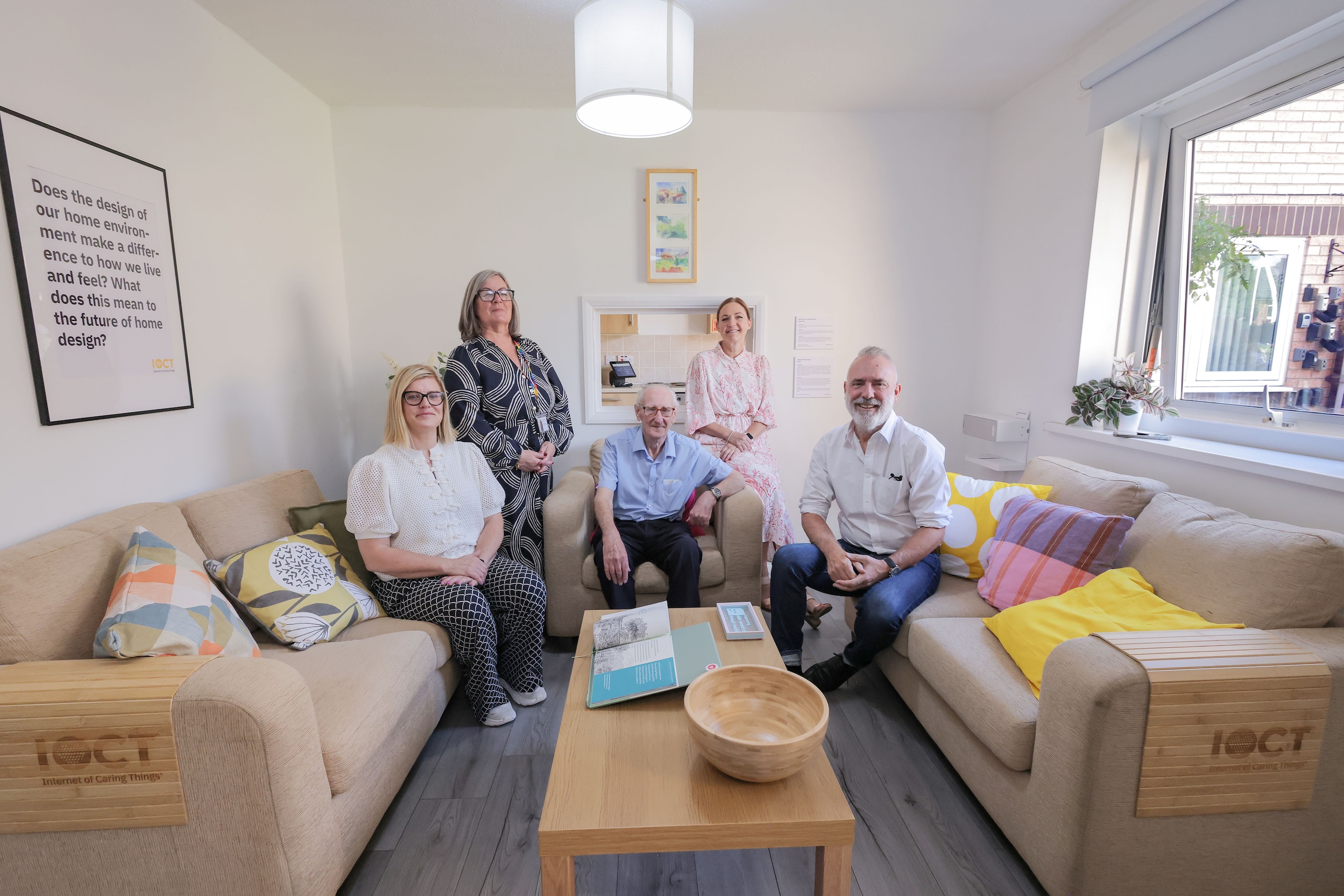
Circadare Care lighting in the Longevity Home.
Why Light Matters in a Longer Life
Light-sensitive cells in our eyes do far more than help us see, they keep time for the body, influencing our mood, alertness, appetite and even our physical coordination. When lighting is designed with this biology in mind, it becomes a form of care, helping us sleep more deeply, steadying daily rhythms, reducing falls, easing evening agitation and lifting overall wellbeing. And crucially, the benefits extend beyond the individual. “We’re having an impact on two people,” Circadacare says, “not just the person with dementia.” In a world where many of us may spend 30 or 40 years in older age, these small shifts ripple outward, supporting carers, strengthening families and widening our sense of what living well for longer can look like.
Co-creation isn’t an add-on, it’s how innovations for longer lives stay grounded, human and useful.
Lighting a Path to Better Ageing
For Circadacare, this is only the beginning. “More voice panels, more access to Voice would be fantastic,” they say. Co-creation isn’t an add-on, it’s how innovations for longer lives stay grounded, human and useful.
Circadacare’s story reminds us that longevity doesn’t always come from big breakthroughs. Sometimes it comes from noticing the everyday things, like the light in our homes and asking how they might quietly support us as we age. Because maybe living well for longer really does begin with something as simple, familiar and powerful as a light bulb.

 &
&