Insights from the first stage of Voice's Global Conversation on Friendship.
Friendship does not remain static across a lifetime. In earlier stages of life, it often forms almost effortlessly. School, university, and the early years of work bring people together regularly, creating the shared environments where relationships naturally develop. Later on, as our lives fill with work, families, and responsibilities, those natural meeting places become less common. And yet, at precisely the same time, friendship often becomes more meaningful, something people value deeply as they move through longer lives.
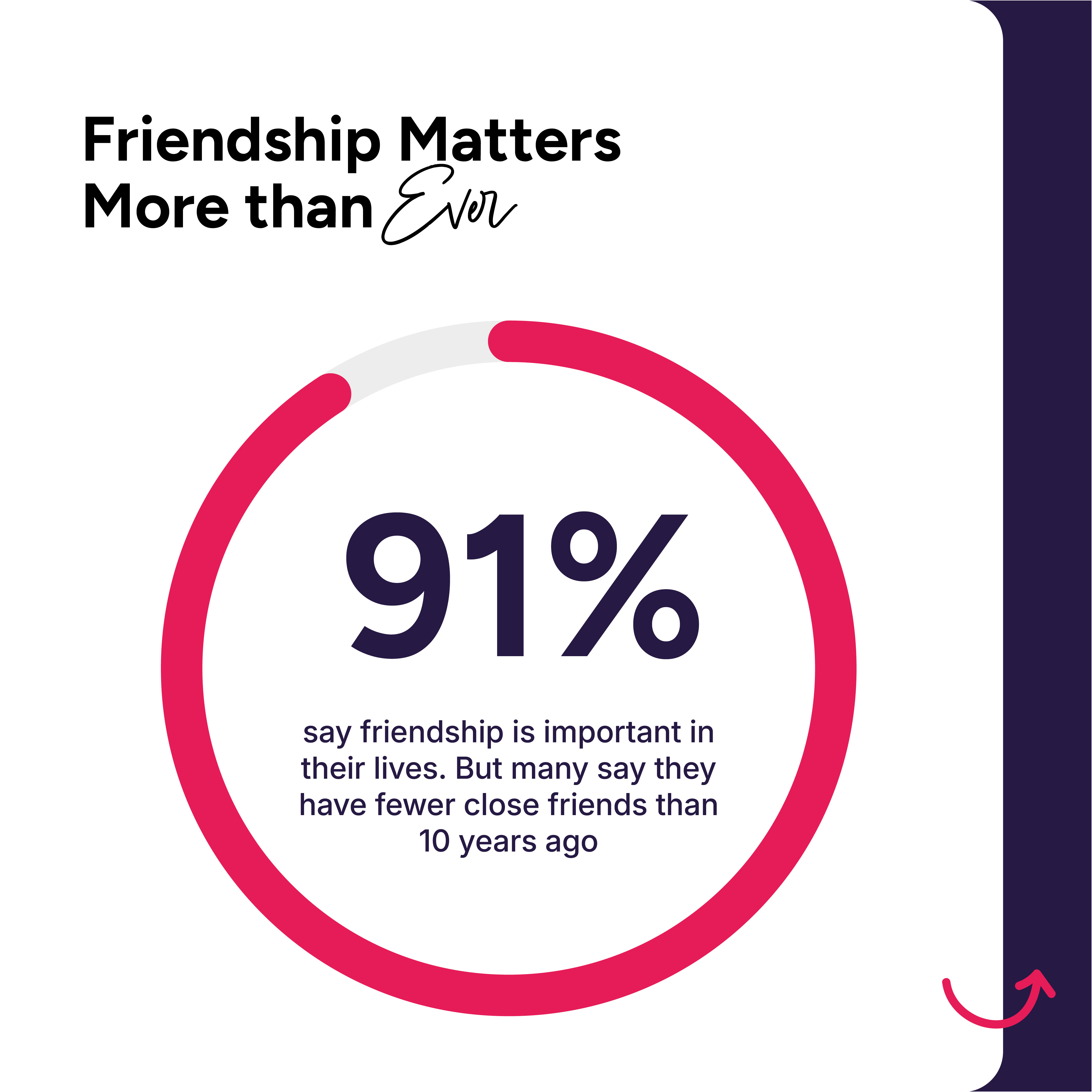
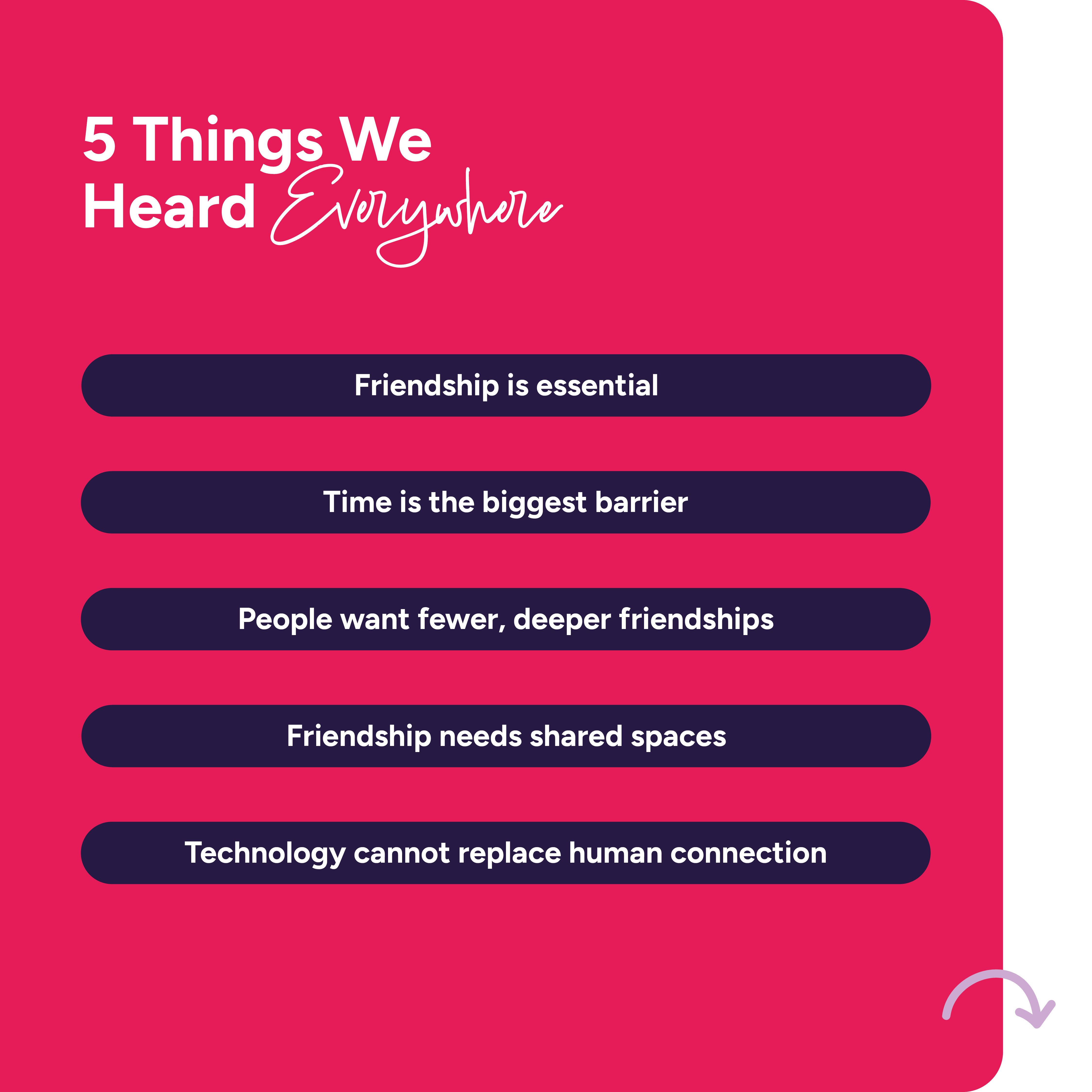
Early insights from the first stage of our global survey reflect this shift. While 91% of respondents told us that friendship is important in their lives, many also say they have fewer close friends than they did a decade ago. In longer lives, friendship may not become less important, it may become more so.
So why does this matter?
Insights from the first stage of Voice's Global Conversation on Friendship.
Why friendship matters more than we might think.
Loneliness is increasingly recognised as one of the major public health challenges of our time. The World Health Organization estimates that nearly one hundred people die every hour from loneliness-related health conditions, with more than 870,000 lives each year. Behind these numbers lies a growing recognition that humans are not meant to navigate life alone. Yet loneliness can still be difficult to talk about.
In our in-depth interviews with Voice members, the stigma of loneliness came up repeatedly. As Toni, 73, from London, told us: “There’s a shame attached to it, that’s the difference.” Even within our own team, younger colleagues noted how reluctant people can be to use the word loneliness at all, for fear of making others feel uncomfortable.
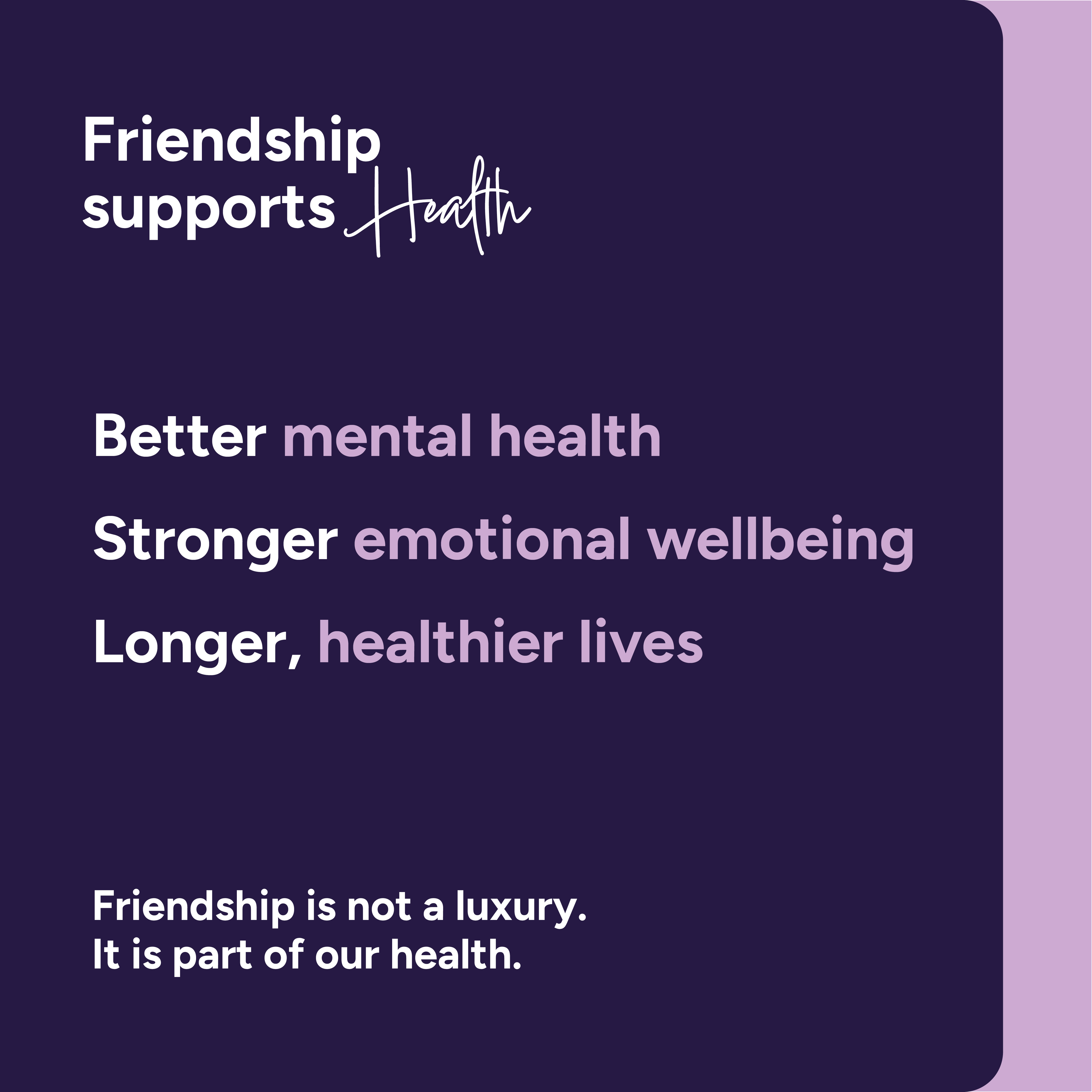
But the opposite of loneliness is not simply connection. It is friendship. And strong friendships reduce stress, support heart and brain health, strengthen ur immune systems, and are closely linked to living longer, healthier lives. Friendship is not just something nice to have; it is a powerful social determinant of health, shaping wellbeing as profoundly as factors such as housing, education, or income.
As we adapt to longer lives, an important question emerges: if friendship plays such a vital role in helping us live well, how might we begin to value and support it more intentionally? This curiosity sits at the heart of our Global Conversation on Friendship.
Insights from the first stage of Voice's Global Conversation on Friendship.
Listening across cultures.
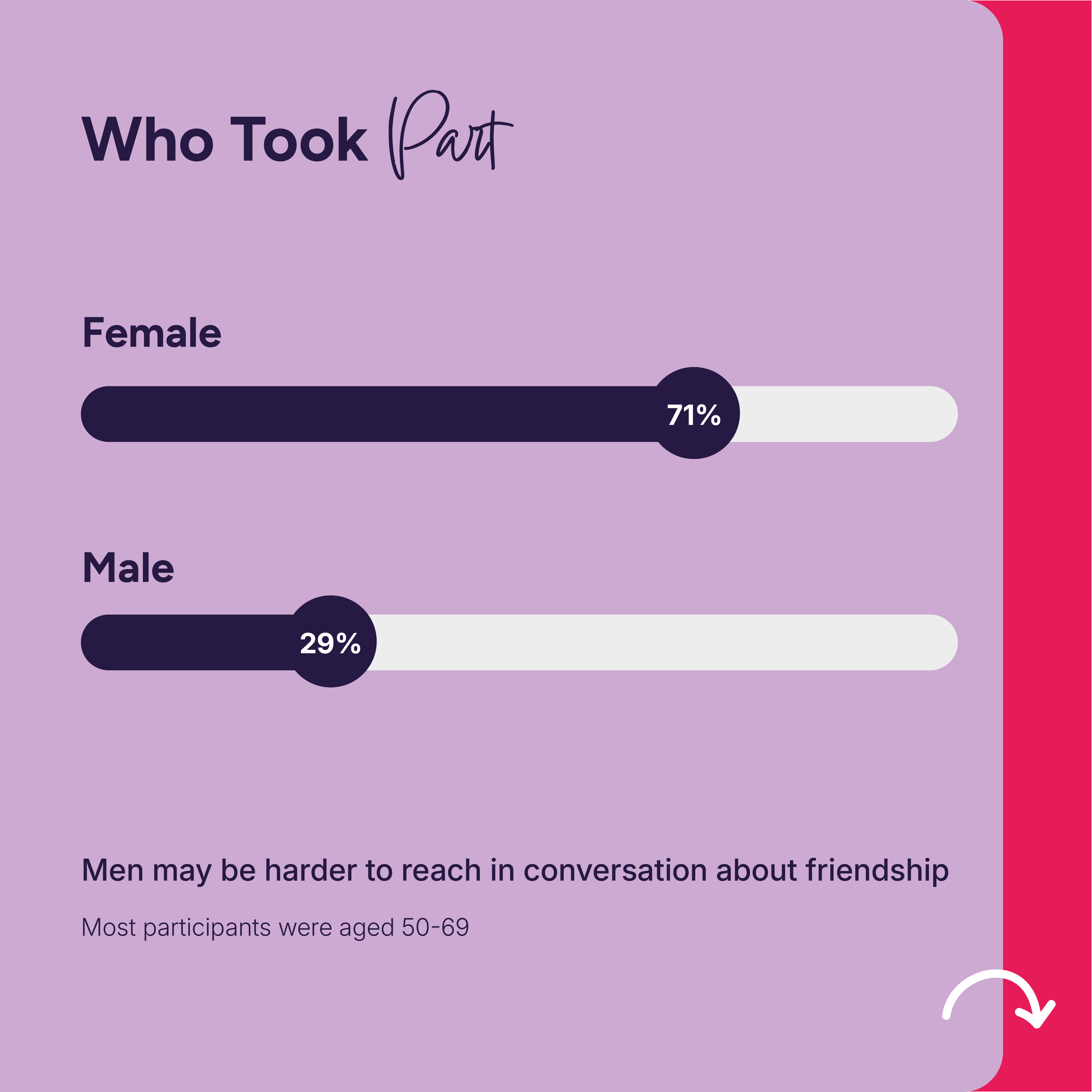
To begin listening, we launched a small pilot survey across three countries: the United Kingdom, Taiwan and Italy. In total, 122 people took part, ranging in age from Voice members in their twenties to those in their eighties, with the majority aged between 50 and 69.
Around 71% of those who took part were women, which may itself reveal something interesting. If loneliness and friendship remain difficult topics to talk about, men may be less likely to participate in conversations about them. Encouraging more men to share their experiences will be an important part of the next stage of our work.
The aim of this early pilot was not to reach definitive conclusions. We simply wanted to begin listening, to understand how people themselves describe the role of friendship in their lives. Even within this small sample, one theme appeared remarkably consistent across cultures. Friendship was described not as a luxury, but as something essential to human wellbeing.
One Voice member in the United Kingdom explained it simply: “Human beings are meant to develop relationships with one another to thrive.” In Taiwan, another Voice member expressed the same idea through the language of care and connection: “We do not live in this world alone; friendship allows us to feel we still have opportunities to give and receive love.” Another Taiwanese Voice member we interviewed, Mrs. Chi, offered a particularly vivid reflection: “A true friend is like a mirror, someone with whom nothing needs to be hidden.” And in Italy, one respondent spoke about the emotional depth that friendships bring to life: “Friends help me develop shared emotional intelligence and empathy.”
Different cultures, different ways of expressing it, yet the underlying message was strikingly similar. Friendship sits close to the centre of a life well lived. And if we are serious about living longer, healthier lives, perhaps it deserves to sit there more intentionally.
Insights from the first stage of Voice's Global Conversation on Friendship.
When life leaves less space for friendship.
As Voice members reflected on how their friendships had changed over time, another pattern began to emerge. The challenge was not that friendship had become less meaningful. In fact, many people described valuing it more deeply as they grew older. What had changed was the space available for it.
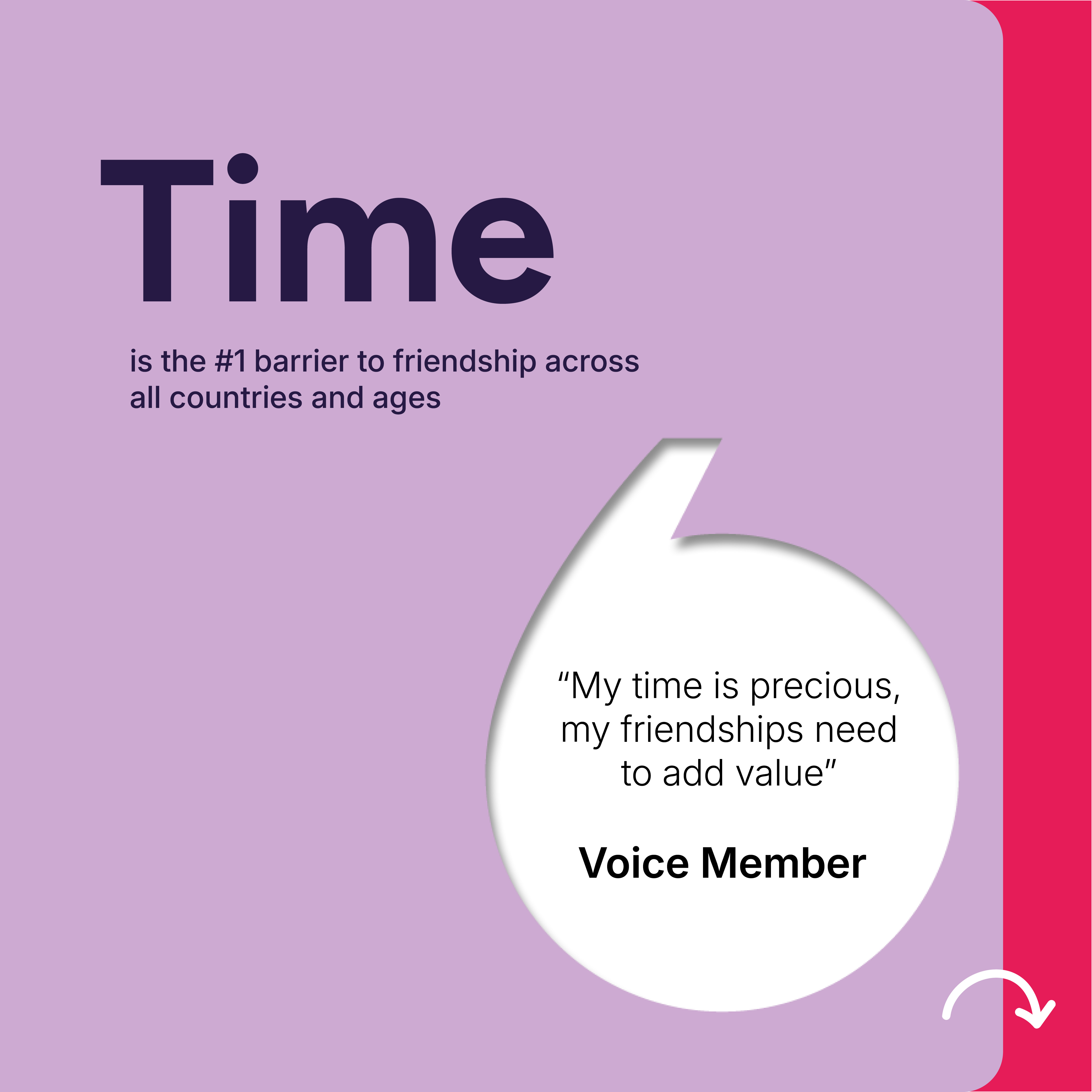
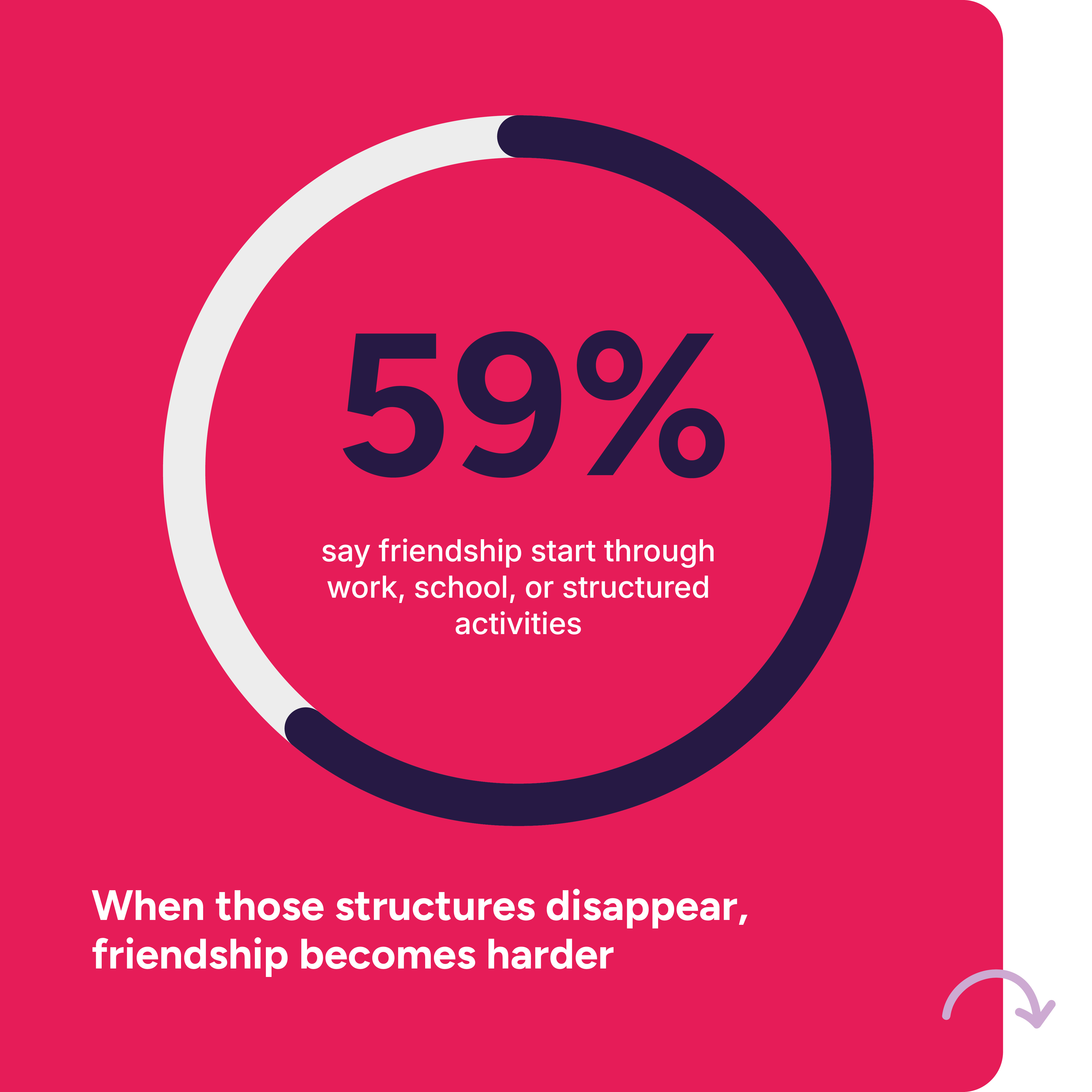
Several Voice members spoke about how the structured environments of earlier life had once made forming friendships much easier. As one person in the UK reflected, “It was easier in a structured environment like school and work, but now it’s harder.” Others described how their social circles had gradually become smaller over time. “My social circle has become smaller,” shared one participant in Taiwan.
Yet this was not always seen as a loss. For some, a smaller circle reflected a growing clarity about the relationships that truly matter. As one UK participant explained, “I am more confident about building relationships and recognising which ones are genuine versus superficial.”
Across countries and age groups, many Voice members spoke about becoming more selective, focusing their time and energy on fewer but deeper relationships.
Insights from the first stage of Voice's Global Conversation on Friendship.
The spaces where friendship grows.
One idea that kept coming up again and again in our conversations was that friendship often grows in places where people simply spend time together. Voice members rarely described friendships appearing suddenly or by chance. Instead, they spoke about relationships that developed gradually through repeated encounters such as seeing the same person at work, in a class, at a club, or through a shared interest. Over time, familiarity becomes conversation, and conversation becomes friendship. Workplaces, schools, community groups and shared activities all emerged as important catalysts.
Several of the Voice members we spoke with reflected on how the spaces around us can make these encounters more possible. Toni in the Uk for example, imagined something simple but powerful, such as low-cost community spaces open on Sundays, where people could gather informally and spend time together without the pressure of organised events. Mrs Chi in Taiwan offered a similar perspective from a different angle, suggesting that apartment buildings themselves could be designed to encourage connection, with shared areas where neighbours naturally cross paths rather than living side by side without ever meeting.
Friendship is rarely something that can simply be engineered or manufactured....grows gradually when environments make it easier for people to spend time together and discover common ground.
When Voice members in our survey were asked what might make it easier to build or maintain friendships, many echoed these ideas. Accessible community spaces were mentioned frequently. As one Voice member in the UK put it: “More accessible community clubs or groups that are low cost or free.” Others highlighted the role of shared activities and community-based experiences in helping people connect.
Taken together, these reflections suggest something important. Friendship is rarely something that can simply be engineered or manufactured. More often, it grows gradually when environments make it easier for people to spend time together and discover common ground.
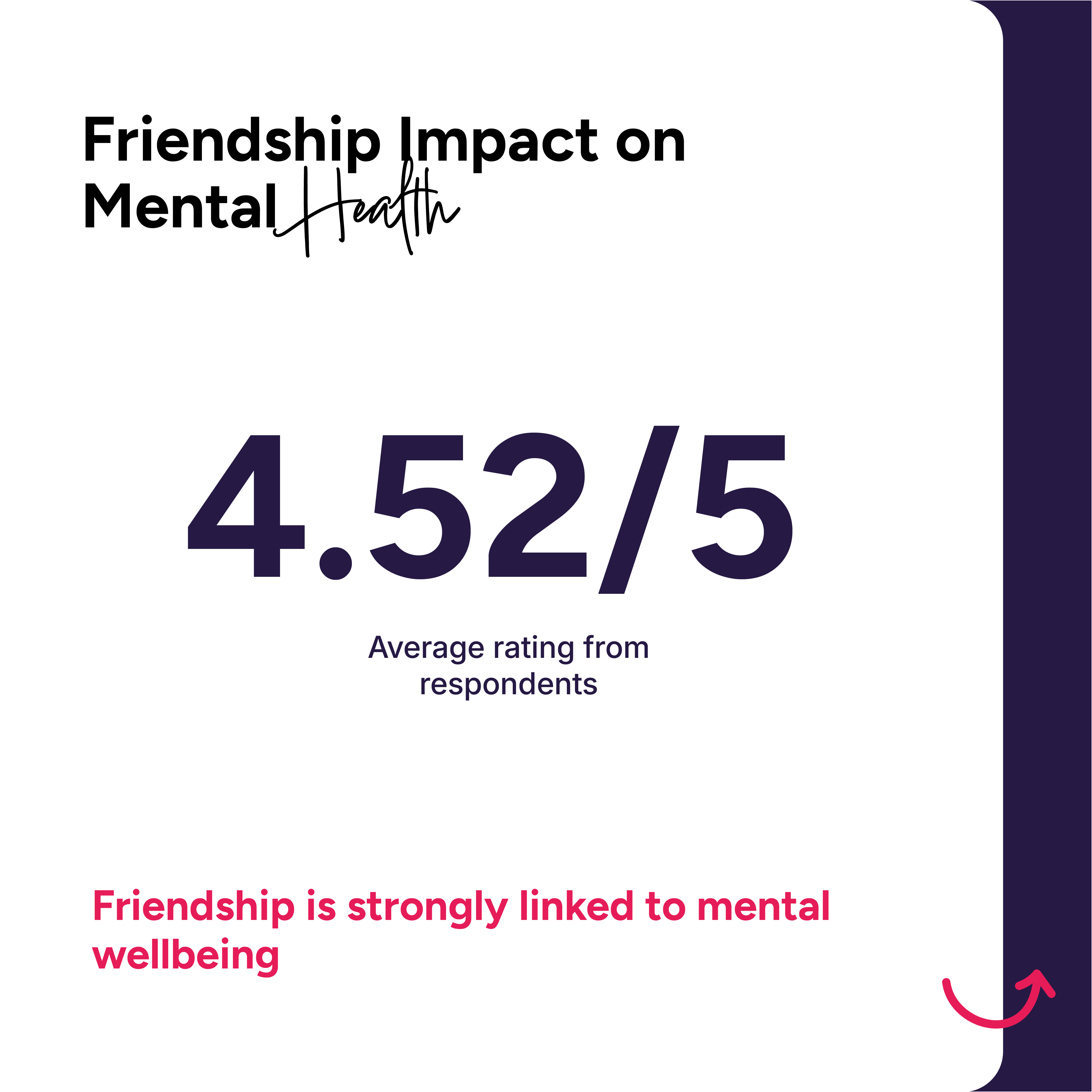
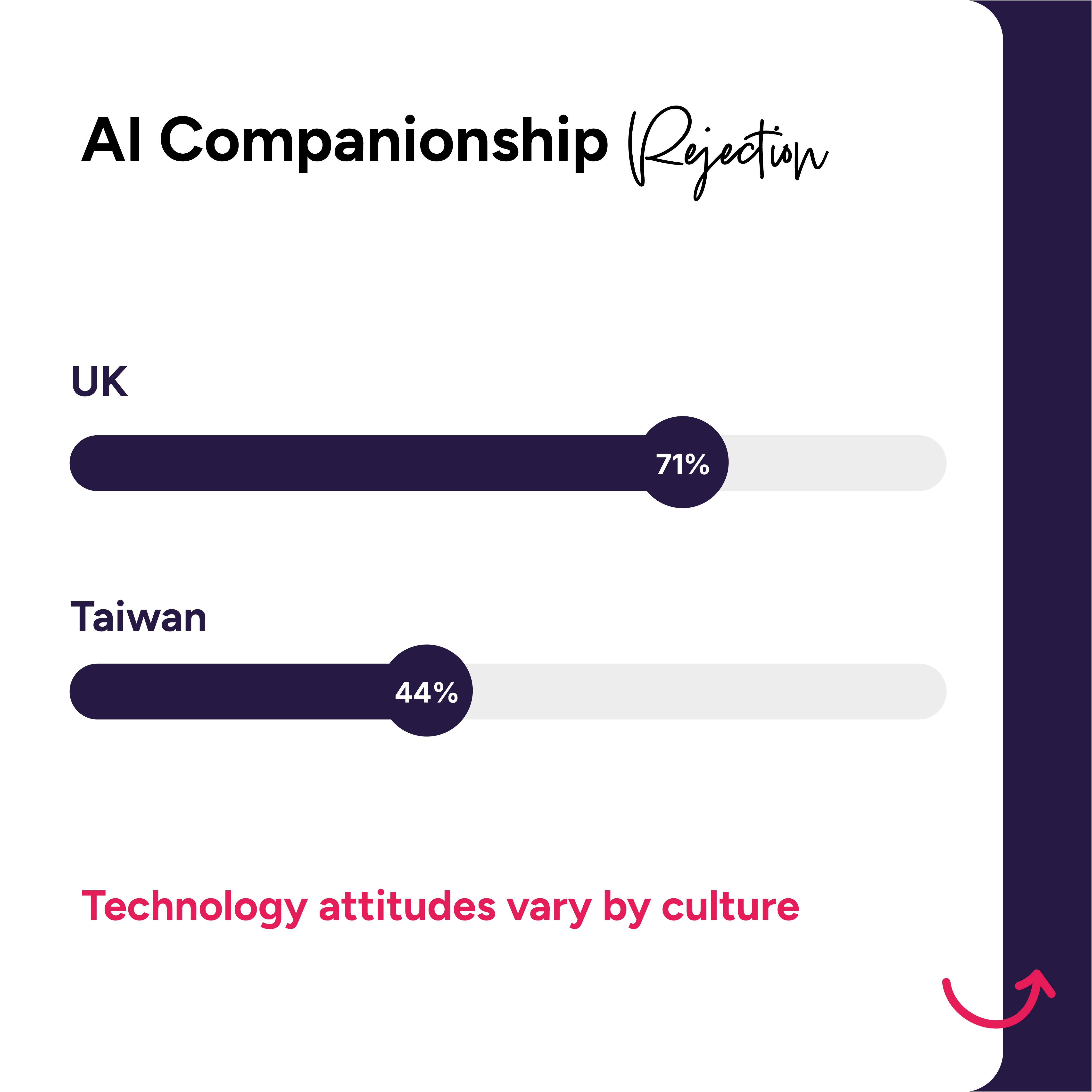
Technology, of course, may still play a role. Digital platforms can help people find events, join communities, or stay connected across distance. But many participants were cautious about the idea that technology alone could replace the deeper rhythms through which friendships form. In our UK survey, AI companionship scored the lowest of all potential interventions, with an average rating of just 1.85 out of 5. As one response put it simply: “You can’t hug AI.”
And yet, this does not mean technology has no place in friendship, only that it works best when it feels human. In Italy, Anna described how she uses WhatsApp, video calls and email to stay connected, especially when distance makes meeting in person difficult. But she is clear about what matters: “When I write a message, I write something of my own.” For her, technology strengthens friendship when it carries intention and sincerity, not when it becomes routine or automatic.
Technology may help us stay in touch. But friendship still grows through something more human and that is time, presence, and genuine connection.
Insights from the first stage of Voice's Global Conversation on Friendship.
Designing longer lives with friendship in mind.
This small pilot represents only the beginning of a much larger exploration. As the Global Conversation on Friendship grows, our aim is to listen to many more voices across countries, cultures, and generations.
What already feels clear, however, is that friendship plays a powerful role in shaping how we experience our lives. It influences wellbeing, resilience, and the sense of belonging that allows people to thrive. In a century where people are living longer than ever before, perhaps the most important question is not simply how long we live, but how we ensure those longer lives remain rich with the relationships that make them meaningful.
If friendship is such a powerful driver of wellbeing, it raises important questions for those designing the systems, services and environments that shape our daily lives. Across the responses, one insight stands out: friendships rarely emerge from deliberate matchmaking alone. They grow through shared experiences, repeated encounters, and environments where people feel comfortable being themselves.
Insights from the first stage of Voice's Global Conversation on Friendship.
In that sense, friendship may not only be a private matter. The design of our neighbourhoods, workplaces and communities quietly shapes whether connection becomes easier or harder. Supporting friendship may therefore be less about building “friendship technologies” and more about creating the conditions where friendship can flourish, through welcoming community spaces, thoughtful housing design, workplaces that leave room for social life, and activities that bring people together. Even the design of our cities plays a role. Creating places where connection and togetherness are part of everyday life sits at the heart of NICA’s City of Longevity programme. At NICA + Voice, part of our role is to listen carefully to people’s lived experiences and use those insights to inform innovation.
What this early pilot suggests is that some of the most powerful interventions may not look like “friendship programmes” at all. They may look like a well-designed community space, a workplace culture that values social time, or a neighbourhood where neighbours are expected to know each other’s names.
—
Continuing the Global Conversation.
This early pilot has opened the door to many further questions. As we continue listening across countries and generations, we want to explore what matters most in people’s everyday lives. Help shape what comes next, take our poll on the questions we should be asking about friendship.

 &
&