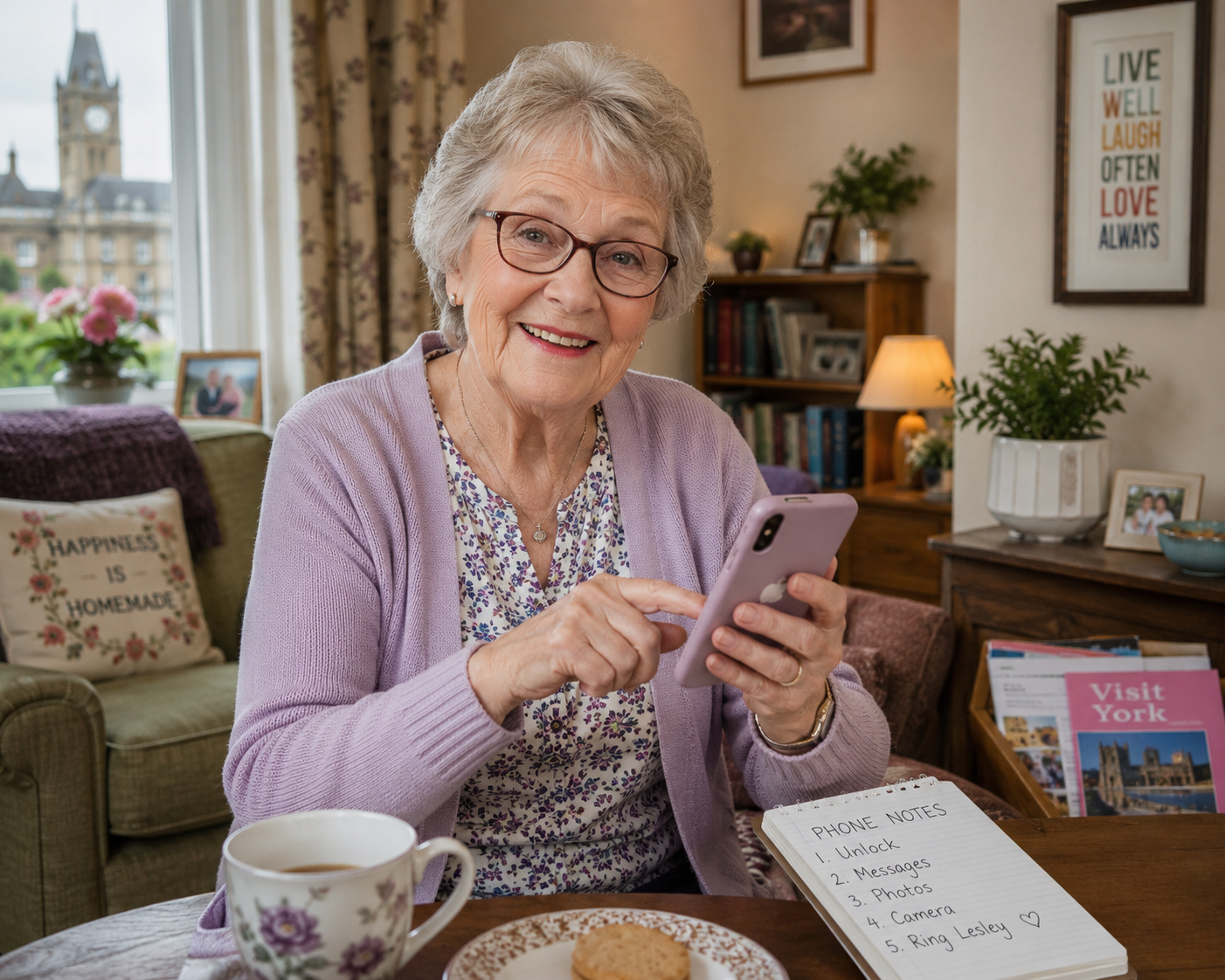
Somewhere right now, a technology company is training an AI system on a synthetic persona. That persona has a name – let’s call her Margaret. She is 72, lives alone in a UK mid-sized city, struggles a little with her phone but is otherwise cheerful and happily living life. She represents, the documentation says, a typical older adult tech user.
Margaret does not exist. She was never interviewed. No one sat with her over a cup of tea and asked what matters to her, what she wants to do, frightens her about losing her independence, or what delights her about a Tuesday morning with friends in the garden. She was assembled – from census data, from consumer surveys, from the outputs of other AI models – by a team who were, in all likelihood, worlds apart from the life she is supposed to embody, and possibly decades younger.
And yet Margaret will now inform the design of a health monitoring app, a care coordination platform, or a wearable device that real people – real women in their seventies, real men navigating dementia, real carers stretched to their limits – will be expected to use. And trust.
An image of Margaret generated by ChatGPT, May 2026.
The Synthetic Turn and Why It Matters.
Synthetic data has become one of the defining instruments of the current AI moment. Its appeal is obvious: it is cheaper than primary research, faster to produce, infinitely scalable, and free from the ethical complications of using real personal data. For many applications – improving road-safety algorithms, for example – it works extremely well.
But healthy ageing and longevity is not a road-safety algorithm. It sits at the intersection of physical health, emotional wellbeing, social connection, identity, purpose, dignity, choice and autonomy. These are important nuanced variables that cannot be adequately captured by a demographic profile or inferred from a purchase history. They certainly cannot be reverse-engineered from a large language model that was itself trained predominantly on text produced by and for people who are not older adults.
This is not hypothetical. We are already seeing AI tools for fall prevention, cognitive support, loneliness monitoring, and medication management that were developed with minimal or no direct input from the populations they serve. Some are already embedded in care pathways. Some are being commissioned by care organisations and health systems under real financial pressure to find scalable solutions, fast. The synthetic persona is not a neutral methodological shortcut. It carries embedded assumptions – about capability, about preference, about what a good life in later years looks like – and those assumptions have consequences.
When a synthetic Margaret tells an algorithm that older adults prefer simple interfaces with large text and high contrast, that may be true, for some people. But it erases the retired architect who finds over-simplified design patronising, the 78-year-old jazz musician who navigates a professional audio editing suite with ease, the woman who has managed her own complex medication regime for forty years and resents being prompted by a device as though she cannot now be trusted. Synthetic personas flatten the radical diversity of human ageing into ‘manageable’ stereotypes. And once these stereotypes are embedded in AI systems at scale, they stop being mere decision choices or shortcuts, and start becoming the silent architecture or infrastructure that guides how we design for and treat later stages of life.
Once these stereotypes are embedded in AI systems at scale, they stop being mere decision choices or shortcuts, and start becoming the silent architecture or infrastructure that guides how we design for and treat later stages of life.
Trust Is Not a Feature. It Is a Foundation
The word trust is used so frequently in AI discourse that it risks losing all meaning. We hear about trusted AI frameworks, trustworthy algorithms, trust-by-design principles. Regulation, transparency, and algorithmic accountability all matter. But they address trust as a property of systems. They say less about what trust means to the person who is being asked to place their health, their safety, or their sense of self in the hands of a technology they did not design, want or fully understand.
For older adults – particularly those navigating health challenges, cognitive change, or care transitions – trust is not primarily about data governance. It is existential. It is the difference between innovation that enhances autonomy, and innovation that quietly undermines it. It is, ultimately, about whether the people designing these systems took the time to understand what actually matters, what people actually really care about.
Genuine trust in AI for healthy ageing cannot be engineered. It has to be earned – through approaches and methodologies that ensure real people are the authors of the knowledge, not merely the subjects. We have been here before with other technologies: for decades, car safety systems such as seatbelts and crash tests were optimised around the “average” male body, leaving women and smaller people at measurably higher risk of injury, not because anyone explicitly chose to value them less, but because they were not centred in the design
The challenges of ageing populations – the projected care gaps, multiple chronic diseases, the loneliness epidemic, the strained health and social care systems – these are all known and urgent innovation challenges. AI has genuine potential to help rapidly address them. But potential is not impact. Potential realised badly, at scale, with good intentions and poor methodology, can cause harm that is slow to surface – and hard to reverse. And we risk repeating the same pattern and problems. Innovation and trust have to be carefully nurtured and valued.
The NICA + Voice® Community.
At NICA + Voice, we have spent over a decade asking a different question. Not: how do we represent older adults in our research and innovation? But: how do we make sure older adults – in all our glorious difference and diversity – are the authors of the knowledge that shapes innovation in our lives? How do we best listen to them and capture their stories, priorities, aspirations, hopes, fears, emotions, and feelings?
The Voice® community is our answer. It is not a panel or a focus group or a dataset. It is a structured, longitudinal approach and methodology for placing lived experience firmly at the centre of innovation – from the earliest conceptual stages of product development through to deployment and evaluation. And because ageing is everybody’s future, Voice® is also intergenerational: older adults work alongside younger people, carers, families, and professionals, so that the knowledge we generate together reflects not just one cohort, but the relationships and futures that connect them.
Members of the Voice® community are not passive. They are active co-producers of insight. They interrogate assumptions, challenge framings, suggest alternatives. They bring perspectives that no synthetic persona can generate, because those perspectives emerge from the texture of real lives, long lived. A wide and diverse range of stories on all aspects of living a long life – what it actually feels like to manage looking for work in your seventies, to navigate a digital health system when you are grieving, to weigh independence against safety, to want to travel after major surgery – and more.
This is what we mean by knowledge architecture. It is not enough to have older adults in the room at the end of a development process, asked to validate something that has already been built. It never was. Real co-production means that the questions being asked – not just the answers – are shaped by and with the people with most at stake. It means that the priorities of innovation are negotiated with, not handed down to, the communities who will live with the consequences.
Over a decade of this methodology has taught us things that no purely synthetic dataset could tell us. It has revealed the moments where well-intentioned design choices create invisible barriers. It has uncovered the emotional and human dimensions of technology adoption that never appear in user testing. It has shown us, repeatedly, that the gap between what designers assume older adults want and need and what older adults actually want and aspire to have is not a small calibration problem – it is often a fundamental misreading of what a good life looks like.
The Replication Problem
There is a further commercial dimension to this. Synthetic personas are attractive partly because they are replicable. Today, any organisation with sufficient compute and the right data sources can generate them. The methodology is commodifiable. The insight, by definition, is not grounded in relationships, in longitudinal trust, in the specific knowledge that accumulates only when you are genuinely present with people over time.
The Voice® community is not replicable without NICA’s methodology – and the methodology is not replicable without the decade of relationship-building, ethical practice, and genuine commitment to co-production that underpins it. This makes knowledge trustworthy in this domain.
As AI investment in the healthy ageing sector accelerates – and it is accelerating significantly – the pressure to cut methodological corners will intensify. Investors want scale. Commissioners want speed. Businesses want growth. The temptation to substitute synthetic personas for real engagement will grow. It is precisely in this environment that the distinction between genuine co-production and its synthetic imitation becomes most important to defend.
The temptation to substitute synthetic personas for real engagement will grow. It is precisely in this environment that the distinction between genuine co-production and its synthetic imitation becomes most important to defend.
The Voice® Community: Who Is Behind the Persona
And at NICA, we are building synthetic personas too. The technology is powerful, and used correctly, it is a legitimate tool for scaling insight across product development, policy design, and service innovation. The difference – and it is a fundamental one – is who is behind ours.
The Voice® community is a dynamic ever growing global community of older adults whose lived experiences, needs, values, and preferences have been gathered, verified, and continuously deepened and expanded through well over a decade of genuine co-production.
When NICA builds a synthetic persona, it is not assembled from census averages or inferred from third-party data. It is grounded in the real, documented, diverse lives of people who have chosen, and continue to choose to contribute their knowledge, their wisdom and experience and actively shaping the world they live in, for the future. This choice matters: participation is invited, not imposed; insight is offered, not extracted. We work closely with people who understand how their data will be used, who see the value of that use, and who retain a say in the questions we ask and the stories we tell.
This is not a static archive. As the community grows, as people’s circumstances change, and as new voices join a truly global conversation, the knowledge base – and the personas built from it – evolve daily. This changes everything about what the persona can do. Synthetic personas built on real humans carry the authority of actual real and nuanced experience. They reflect the extraordinary diversity of later life – across cultures, geographies, health conditions, socioeconomic backgrounds, and personal identities. It can represent not just what older adults do, but what they feel, what they fear, what they hope for, and what they refuse to compromise on.
And critically, it can be tested. When a product team wants to validate an assumption, we do not run it back through the model. We go back to the community. We ask real people. We check whether the insight holds across different cultures and contexts. This is the capability that no one can replicate without building what we have built – and what we have built took over ten years of sustained, relationship and trust building.
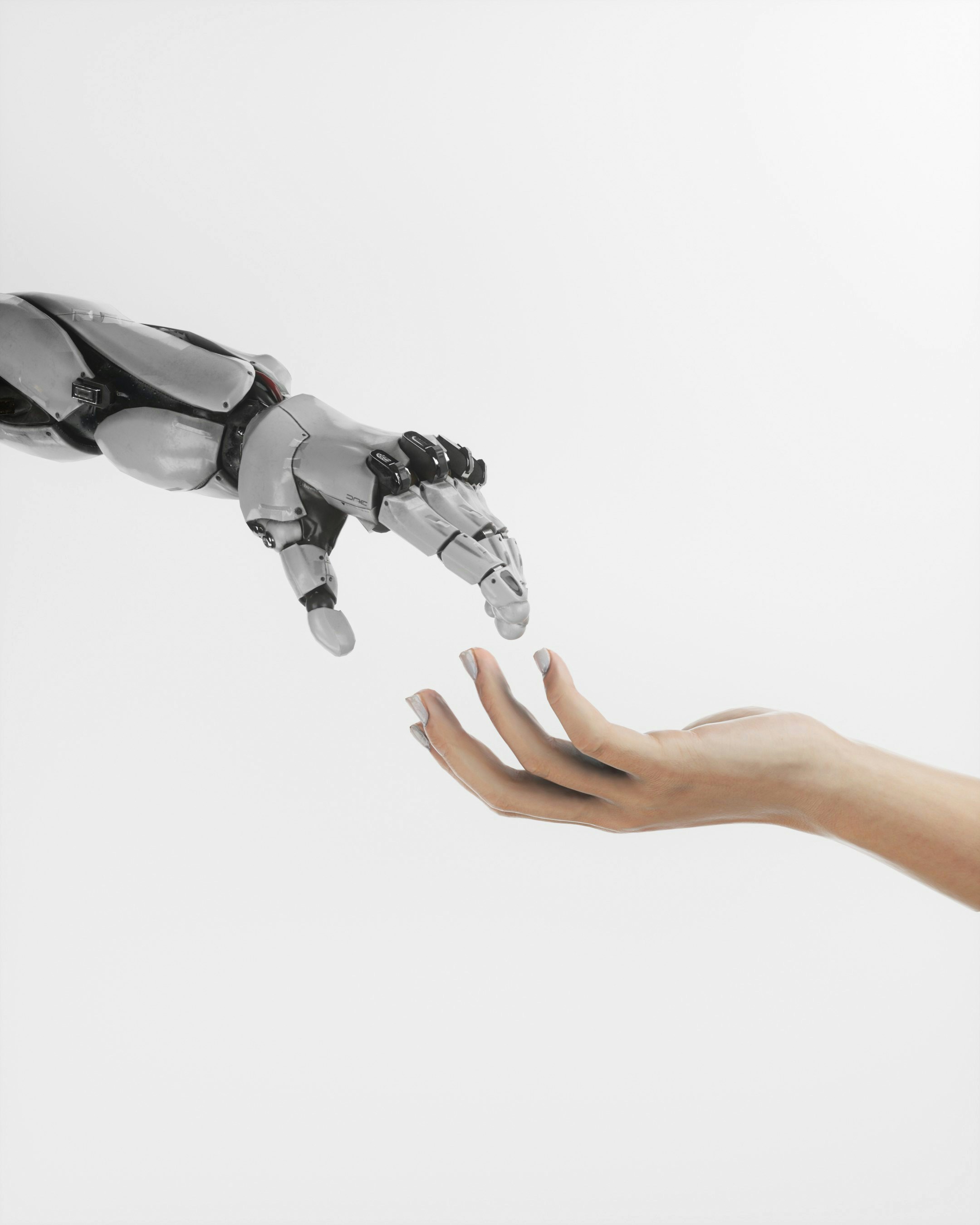
Photograph by Cash Macanaya on Unsplash
A Global Methodology for a Global Challenge
Ageing is of course not a uniform experience. What constitutes a good later life in rural Japan looks different from what it means in urban Brazil, suburban England, or a multigenerational household in Malaysia, or two neighbours living side by side anywhere in the world. The assumptions baked into most AI systems for ageing – including most synthetic personas – are overwhelmingly western, urban, and English-language. Yet healthy longevity itself is a shared human project: almost every society is ageing, and what we build now will shape not only today’s older adults but the futures of people who are currently in school, or just starting their working lives.
Because the Voice® community spans backgrounds, contexts, cultures, languages, and geographies, NICA’s methodology is surfacing what is universal about ageing – the desire for dignity, for connection, for purpose, for autonomy – while also capturing what is culturally specific about how those desires are expressed and what barriers stand in their way. This is not something that can be achieved through data augmentation or demographic weighting. It requires real relationships with real communities, built over time.
For organisations developing AI solutions that need to work across markets – and in healthy ageing, that is most of them – this global, grounded, human-first methodology is not just ethically preferable. It is commercially essential. The cost of getting cultural context wrong in healthcare AI is not a reputational footnote. It is clinical risk.
Margaret will keep appearing in AI development pipelines. She will accumulate detail, nuance, regional accents, health histories. She will become more sophisticated and more convincing. And she will still be missing the one thing that cannot be simulated: the trust and authority that comes from having actually lived the life in question, in all its messy complexity.
At NICA + Voice, we believe that the future of AI in healthy ageing depends on an honest reckoning with this limitation. It requires the sector to move beyond the comfortable efficiency of synthetic representation and make the harder, slower, more genuinely respectful investment in real listening, global conversations and co-production. That is what the Voice® community makes possible. They are a methodology for making real people’s incredible wisdom, insights, creativity, ideas and experience scalable and practically embedded to meaningfully inform research and innovation – without ever losing the human behind the data and machine. And in a moment when the AI boom is generating more claims than evidence, more products than outcomes, and more representations of older adults than real conversations with them, we think that matters more than ever.

 &
&